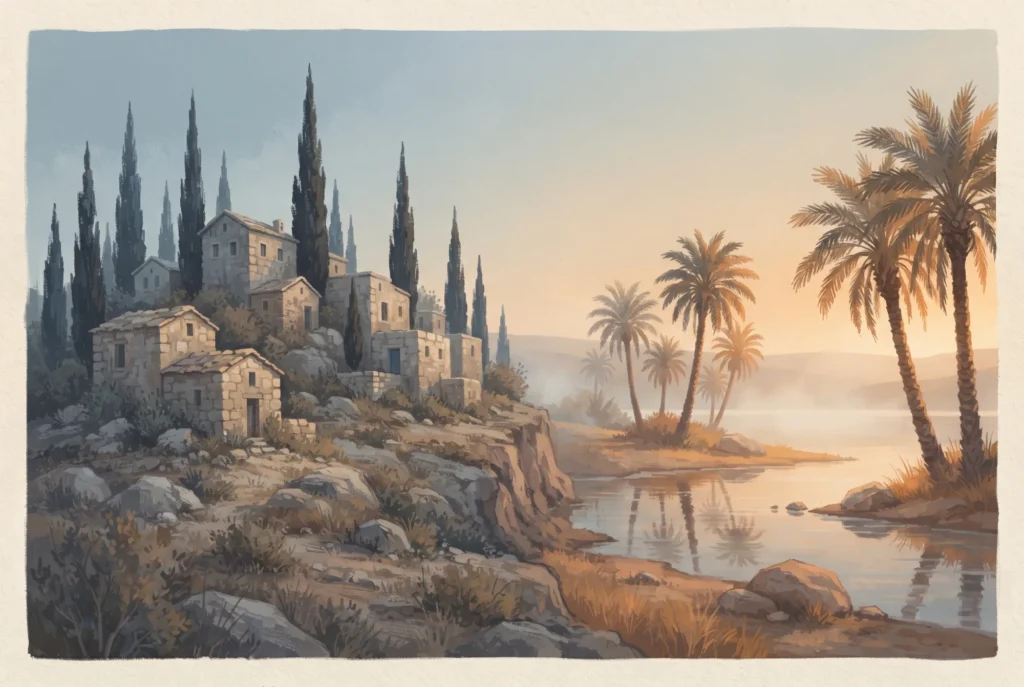
Tzfat (Safed) and Tiberias are 35 kilometres and about a kilometre of altitude apart, and they are two different holidays. Safed is a cool mountaintop of stone alleys, synagogues and galleries where Shabbat is the main event; Tiberias is a hot lakeside resort with beaches, hot springs, big hotels, Christian sites and the kevarim (graves of the righteous) of the Rambam and Rabbi Meir Baal HaNes. Shabbat, Kabbalah and walking: stay in Safed. Lake, swimming and tour-bus convenience: stay in Tiberias. Here is the honest comparison, and a plan for doing both. (Ashkenazi speakers say “Tzfas”; older maps write “Zefat” or “Tsfat”.)
Altitude and climate: 1,000 metres make a different season
The single most useful fact for choosing: Safed’s hilltops stand at roughly 800 to 937 metres, making it the highest city in Israel, while Tiberias sits on the Sea of Galilee (the Kinneret), whose surface lies about 210 metres below sea level, the lowest freshwater lake on earth. The town climbs the slope behind, but the hotels and promenade are down at the water.
That gap shows on the thermometer. Safed’s July and August average highs are around 31°C, with evenings in the low twenties and a breeze through the alleys. Tiberias averages about 38°C on the same days, with nights near 25°C and humidity off the lake. In winter the order reverses: Tiberias stays mild at 10–18°C, while Safed drops to around 5–10°C with frost, hard rain and occasional snow.
Rule of thumb: June to September, sleep in Safed and drive down to the lake for the day. November to March, consider the reverse.
Character: alleys and synagogues vs promenade and beaches
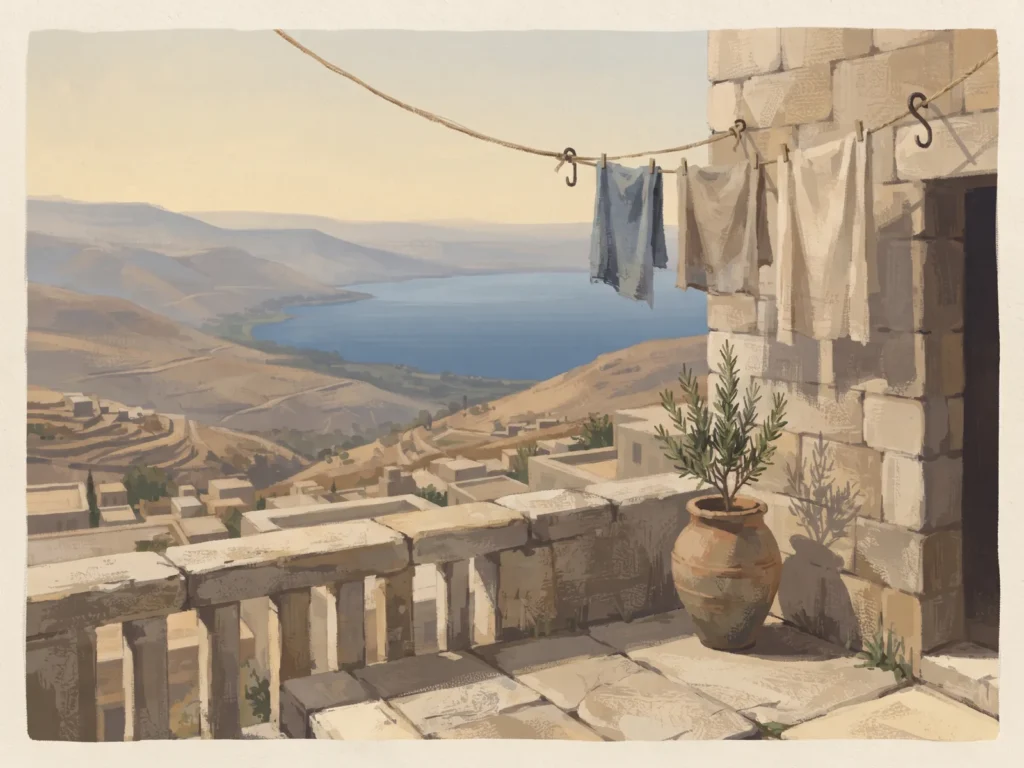
Safed is a hill town. The Old City is a knot of lanes too narrow for cars, with 32 synagogues in the old Jewish Quarter, the sixteenth-century sanctuaries of the sages of Tzfat, the Artists’ Quarter in the former Arab quarter, and the Old Cemetery falling away on the western slope. Evenings are quiet: a walk, a lesson, a gallery open late in summer, Meron turning purple.
Tiberias is a resort. Founded around 20 CE by Herod Antipas, it rebuilt itself after 1967 around a waterfront promenade, shopping streets, restaurants and modern hotels, and serves two crowds at once: Christian pilgrims bound for the Gospel sites on the north shore, and Israeli families on a lake holiday. It is louder, flatter and easier to drive. Frommer’s warns that on summer and holiday nights discos and party boats can keep light sleepers awake; nobody has ever said that about Safed.
What each is close to
From Safed the day trips are uphill and west. Meron, with the kever of Rabbi Shimon bar Yochai, is 8 km away; Amuka, where singles pray at the grave of Yonatan ben Uziel, about 6 km north-east. Bar’am National Park, around 16 km north-west near the Lebanese border, holds one of Israel’s best-preserved ancient synagogues, its façade intact to the second storey. Nachal Amud, the “Stream of the Pillar”, rises near Mount Meron, passes below Safed and drops to the Kinneret through a gorge of prehistoric caves. See our kevarim listings and tours.
From Tiberias everything is around the lake. Beaches and kibbutz guesthouses are minutes away. Capernaum, with its white-limestone synagogue and the house tradition assigns to St Peter, anchors the Christian sites of the north shore. At the southern edge, Hamat Tiberias National Park has seventeen mineral hot springs, used since Roman times, and a fourth-century synagogue floor with a zodiac mosaic. And Tiberias is the fourth of the Four Holy Cities: the Rambam’s tomb in the centre, Rabbi Akiva’s on the hillside above, Rabbi Meir Baal HaNes’s above the hot springs by the southern shore, the first Chassidic leaders in the old cemetery (the first three identifications rest on tradition). Our hilula calendar gives every date and which burials are tradition rather than record.
Where you sleep, and what it costs
Safed has almost no large hotels. It has guesthouses, family-run B&Bs (zimmerim in Israeli usage), apartments and converted stone houses in and around the Old City, a few hostels, and larger religious guesthouses that fill for Shabbat and holidays. The charm is the building: vaulted ceilings, a courtyard, a roof with a view. The trade-offs are stairs, distant parking and the need to book early for Shabbat. Browse the accommodations directory.
Tiberias runs from hostels to very large tour-group hotels, plus glatt-kosher religious guesthouses and private rooms listed by the tourist office. Lakefront and spa hotels are the top of the market; kibbutz hotels around the lake are the alternative with a car. We give no prices because they swing with season and holidays; broadly, Tiberias has more rooms at every band and more off-season bargains, while Safed has fewer rooms and firmer prices around Lag BaOmer and in August.
Food and kosher options
Both towns are overwhelmingly kosher. In Safed almost every restaurant and café carries a certificate, from Jerusalem Street falafel and bakeries to the dairy cafés of the Artists’ Quarter; see our restaurants directory. Tiberias has more volume and variety, including hotel dining rooms and supermarkets, some with a kosher butcher section; supervision is mostly the local Rabbinate, with some private hechsherim, so check the certificate and ask.
Shabbat: this is where the choice is made
In Safed, Shabbat is not a closure to plan around but the reason to come. Shops, galleries, restaurants and buses stop by Friday afternoon, candles are lit thirty minutes before sunset by local custom, and the Old City becomes a candlelit walk between synagogues singing the Kabbalat Shabbat service composed in these alleys in the 1500s. Visitors are routinely hosted for meals. Our Shabbat in Tzfat guide covers what closes, where to pray and how to arrange them.
Tiberias keeps a different Shabbat. Its religious neighbourhoods and kosher hotels observe fully, and hotels used to observant guests offer Shabbat keys and urns, sometimes a Shabbat elevator, with minyanim in the synagogues nearby. But the promenade, the beaches and much of the tourist trade continue. For a secular traveller that is a plus: you can swim and eat out on Saturday. For an immersive Shabbat, Safed wins without a contest.
Getting between them
By car it is 35 km and 30 to 40 minutes: Route 90 along the lake, then up the hill via Rosh Pina. By bus, line 450, operated by Superbus, links Tiberias Central Station with Safed Central Station about every 40 minutes on weekdays (Moovit, November 2026), taking 30 to 40 minutes depending on where you board. There is no service during Shabbat; the last Friday bus leaves mid-afternoon and runs resume on Saturday night. Full directions are on our getting to Tzfat page.
Who should pick which
Choose Safed for Shabbat; for Kabbalah, the sixteenth-century synagogues and the landmarks of the Old City; for summer nights with the window open; for walking, galleries and quiet evenings; or for a pilgrimage to Meron and Amuka.
Choose Tiberias for beaches, boats and hot springs; for the Gospel sites; for small children who need a pool and flat pavements; for mobility limits (Safed’s Old City is all steps); for winter; or for the widest choice of rooms on a group budget.
The “do both” plan
Three or four nights covers it. Spend Thursday and Friday nights in Safed: walk the Old City, hear the sages’ stories, stay through a full Shabbat. Sunday morning, drive or take the 450 down to the lake for two nights: Hamat Tiberias and the Rambam the first afternoon, Capernaum or a swim the second. If a hilula falls in your window, check the calendar and bend the route towards it. With a car you can keep one base and day-trip the other; the honest advice is to sleep high in summer and low in winter.
Frequently asked questions
Is Safed or Tiberias better for Shabbat? Safed, decisively. The whole Old City observes, Kabbalat Shabbat is sung where it was composed, and visitors are routinely hosted. Tiberias has fully observant hotels and neighbourhoods, but the resort around them stays open.
How far apart are Safed and Tiberias? About 35 km by road, 30 to 40 minutes by car. Superbus line 450 runs about every 40 minutes on weekdays and takes 30 to 40 minutes, but not during Shabbat or holidays.
Which is hotter? Tiberias, by a wide margin: average summer highs of about 38°C by the lake against about 31°C in Safed, with lake nights around 25°C. In winter Tiberias is the milder base.
Can I visit the Christian sites from Safed? Yes. Capernaum and the north shore are roughly 40 minutes’ drive from Safed via Rosh Pina and Route 90 (our estimate; allow more in traffic), so a Safed base suits pilgrims who also want the Jewish Galilee. Without a car, Tiberias is far more practical.
Where are the Rambam and Rabbi Meir Baal HaNes buried? In Tiberias: the Rambam in the city centre and Rabbi Meir Baal HaNes near the southern shore above the hot springs, with Rabbi Akiva’s tomb on the hillside above town. All three identifications rest on long tradition rather than contemporary record.
Sources
- Safed – Wikipedia — elevation (up to 937 m; 850 m infobox), highest city in Israel, climate averages, 32 synagogues, distance to Tiberias, Four Holy Cities.
- Tiberias – Wikipedia — elevation range (−200 to 200 m), climate averages (38°C July–August highs), founding by Herod Antipas, post-1967 resort development, tombs of Rambam, Rabbi Meir and Rabbi Akiva, Four Holy Cities since the 18th century.
- Sea of Galilee – Wikipedia — surface about 209–215 m below sea level; lowest freshwater lake on earth.
- Hamat Tiberias – Wikipedia — seventeen springs, national park at the southern end of Tiberias, fourth-century zodiac mosaic.
- Capernaum – Wikipedia — synagogue, Peter’s house tradition, 2.5 km from Tabgha.
- Tiberias to Safed – Rome2rio — line 450, Superbus, about 160 weekly buses, about 29 minutes; driving about 35 km (22 miles) and 32 minutes.
- Line 450 – Moovit — Superbus; Safed Central Station to Tiberias Central Station; every 40 minutes Sunday to Friday (Su–Th 05:30–23:10, Fri 06:05–16:00), Saturday night 21:00–00:00 hourly; about 38 minutes end to end.
- Side Trips in Safed – Frommer’s — Meron 8 km, Bar’am about 16 km north-west, 3rd–4th-century synagogue.
- Tiberias Hotels Overview – Frommer’s — hostels to very large tour-group hotels, glatt-kosher guesthouses, private rooms via tourist office, summer noise from discos and party boats, kibbutz alternatives.
- Ancient Synagogue at Bar’am – Jewish Virtual Library — façade intact to the second storey, location between Sasa and Dovev near the Lebanese border.
- Nahal Amud Nature Reserve – Danny the Digger — course from Mount Meron past Safed to the Kinneret, the pillar, prehistoric caves.
- Kosher Travel in Tiberias – GoKosher — kosher restaurants and supermarkets (some with a kosher butcher section), Rabbinate supervision with some private hechsherim, hotel Shabbat keys and urns, “sometimes” a Shabbat elevator; minyanim in city synagogues.
- Shabbat in Tzfat – cityoftzfat.com (batch page 02) — 30-minute candle-lighting custom, Friday closures.
- Hilulot and kevarim calendar – cityoftzfat.com (batch page 10) — Tiberias burials and their status as tradition.