
Yes, for the right visitor and the right day: Tzfat (Safed) is a small mountaintop town of blue-painted alleys, four 16th-century synagogues and the graves of the kabbalists who shaped Jewish prayer, and nothing else in Israel feels like it. It is not worth it if you arrive on Shabbat without a plan, expect a city, or cannot manage several hundred steps. This page is written by people who live here, so we will tell you both halves.
The short version
Give Safed one full weekday and it repays you. Give it a Saturday afternoon and you will stand in a locked, silent town wondering what the fuss is about. Most online disappointment comes from timing, not from the place.
Ashkenazi speakers say “Tzfas”; older maps write “Zefat” or “Tsfat”. Google serves all of them, and so do we.
Who falls in love with it
- People drawn to Jewish history and mysticism. Safed is one of the Four Holy Cities, and in the 1500s it held one of the densest gatherings of Jewish mystics in history. You can pray in the synagogue of the Arizal, stand where Rabbi Yosef Karo is said to have written the Shulchan Aruch, and walk down to the kevarim (graves) of the men who wrote the Friday-night service. For this visitor there is no substitute anywhere.
- Religious visitors and ba’alei teshuvah. Minyanim from dawn to night, a spring-fed mikveh, classes in every tradition (see learn Kabbalah in Tzfat), and a town that keeps Shabbat completely.
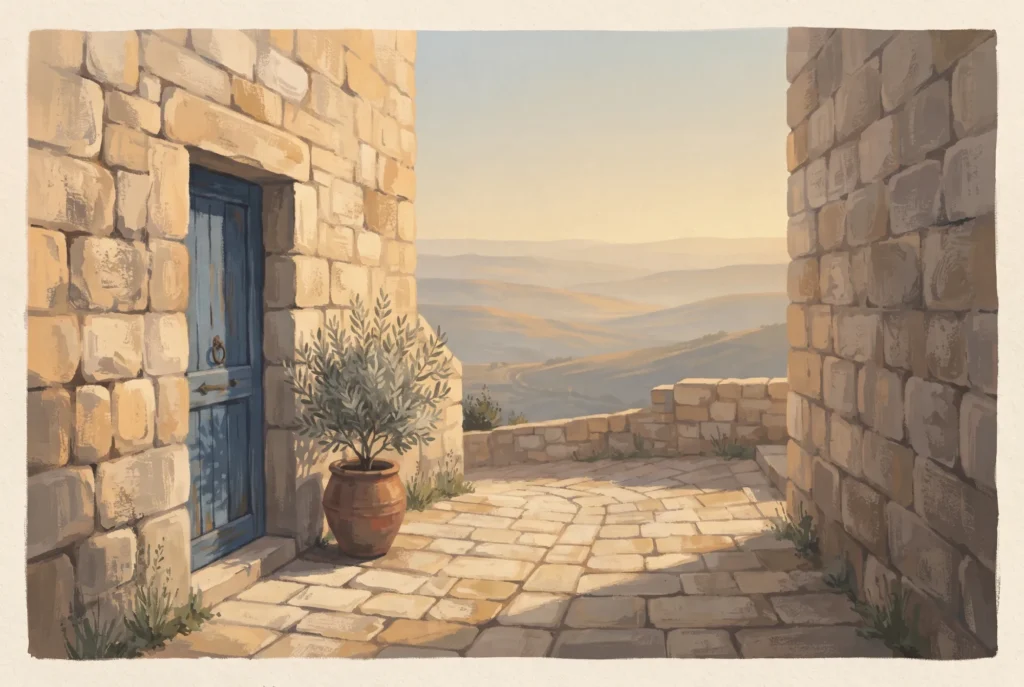
- Photographers. Chalky blue doors, honey-coloured stone, laundry across stairwells, and in late afternoon the western light on the cemetery slope with Mount Meron behind. Winter fog that swallows the Old City; some years, snow.
- Slow travellers. The Old City is best wandered without a list. Bloggers who stay a night or two consistently say it suits them better than those racing through on a coach.
- Art buyers. The Artists’ Quarter founded in 1949 still has working studios beside the souvenir stalls, and the General Exhibition in the old market mosque is a cooperative where local artists sell direct.
- Families with older children. The candle workshop’s wax dioramas, the Citadel ruins, a cheese dairy running since 1840 and a Crusader-to-1948 story that plays out in bullet holes on real walls. Small children who tire on stairs are a harder sell.
Who may be disappointed
- Nightlife seekers. There are a few cafés and the occasional evening of live music, but no bars to speak of and little late food. Evenings are for the view and the singing.
- Anyone arriving on Shabbat without planning. From Friday afternoon until Saturday night the shops, galleries, restaurants and city buses stop. One backpacker’s account of reaching Safed on a Friday with no dinner and no ride home is the most common bad review there is. Read Shabbat in Tzfat first: planned, it is the best 25 hours of the trip; unplanned, it is a wasted day.
- Those expecting a city. Safed has under 40,000 residents, and the historic core is a few hundred metres across. If you want museums by the dozen, go to Jerusalem.
- Midsummer midday visitors. July and August highs run around 30°C. The mountain breeze and cool nights make it a favourite Israeli summer escape, but the stone stairs at 1 p.m. in August are not pleasant. Start early, rest at lunch, finish at golden hour.
- Visitors with limited mobility. Almost every alley is a staircase. The big British-built stairway, Ma’alot Olei HaGardom, alone has over 300 steps. Jerusalem Street, the Citadel park and Keren HaYesod Street are reachable by car and give good views, but the inner quarter is not wheelchair-friendly, and there is no way around it.
What is actually there
Four historic synagogues in the Old Jewish Quarter, all free, all closed to visitors on Shabbat: the Yosef Caro, the Abuhav with its painted dome and the southern wall that, by local tradition, survived the 1837 earthquake, the tiny Ari Ashkenazi with its carved olive-wood ark, and the Ari Sephardi above the cemetery, the oldest of them, with the small room where tradition says Elijah taught the Ari. The full list is in the synagogue directory.
Below them, the Old Cemetery: the sky-blue graves of the Arizal, Rabbi Yosef Karo, the Ramak and Rabbi Shlomo Alkabetz within a few paces of each other, and the Ari’s icy mikveh at the edge. Across the stairs, the Artists’ Quarter with its galleries and the General Exhibition. On top, the Citadel park: scattered Crusader and Mamluk remains, flattened by the 1837 earthquake, with the Kinneret glittering more than a thousand metres below. And everywhere, the alleys themselves, which are the real attraction. Our self-guided Old City walk strings all of it into two and a half to three hours.
The common complaints, honestly
- “It’s small.” True. Safed is a half-day of sights and a full day of atmosphere. Travellers who allot it two hours between Tiberias and the Golan see the synagogues and miss the town.
- “It’s hilly.” Also true. Wear shoes with grip; the stone is polished smooth and, in winter, wet.
- “Everything was closed.” You came Friday afternoon or Saturday, or in winter, when many small galleries open only by appointment or only in spring and summer. Guidebooks note the same. Sunday to Thursday, 10 a.m. to 5 p.m., most doors are open.
- “The galleries are touristy.” Some are. The main gallery lane sells plenty of mass-market Judaica, and a few sellers push harder than they should. Walk one alley further and you will find someone actually painting. The art directory tells working studios from shops.
- “Parking is a nightmare.” In the Old City lanes, yes; do not drive in. The Saraya lot off Aliya Bet Street and the paid kerb spaces on Jerusalem Street are a five-minute walk from everything. Details in getting to Tzfat.
- “The Caro synagogue looks run-down.” A major guidebook says exactly this, and it is fair. These are living prayer houses, not restored museums. That is also why they are worth seeing.
How long to give it
Half a day (3 hours) unlocks the synagogue quarter and the cemetery, or the synagogues and the Artists’ Quarter, not all three. Fine from Tiberias, which is 30 to 40 minutes away.
A full day unlocks the whole Old City at a human pace: Citadel in the morning, synagogues until lunch, galleries in the early afternoon, cemetery at golden hour. This is the right answer for most people and the one our things to do in Tzfat guide is built around.
Overnight unlocks the two things day-trippers never see: the alleys after dark, when the singing from a dozen synagogues carries in the stone, and the early-morning cemetery with nobody in it. Stay Thursday to Friday and you also get the Friday-morning bustle on Jerusalem Street and a half-day before Shabbat (the weekly market is on Wednesday); stay over Shabbat, with meals arranged in advance, and you get the thing the town was built for. See accommodations and restaurants.
Best season
May, June, September and October are the sweet spot: dry, 25 to 29°C, long evenings, open galleries. Late spring also brings Lag BaOmer at nearby Meron, which can close roads; check the hilula calendar before choosing a date. July and August are hot at midday but liveliest, with the Klezmer Festival (three nights of free concerts every summer since 1988, usually in August; the 39th ran 18 to 20 August 2026). Winter is cold, often foggy, occasionally snowed in, and empty, which some photographers prefer; bring a real coat and expect some galleries shut. Check the events page for what is on.
The verdict: worth it if…
- …you care about Jewish history, Kabbalah or the roots of the prayers you already say.
- …you come Sunday to Thursday, or stay over Shabbat on purpose, with meals arranged.
- …you give it a full day, or better, a night.
- …you can climb stairs, and wear shoes that grip.
- …you treat the galleries as a stroll, not a mall, and buy only what you love.
Not worth it if you have one Saturday afternoon, a stroller, and a hope of nightlife. In that case, spend the day at the Kinneret and come back properly. The town has waited 500 years; it will wait for you.
Frequently asked questions
Is one day enough for Safed? Yes. One full weekday covers the four synagogues, the Old Cemetery, the Artists’ Quarter and the Citadel at a comfortable pace. Two or three hours covers the synagogue quarter alone. A night adds the alleys after dark and the cemetery at dawn.
Is Safed a tourist trap? No, though parts of the main gallery lane are commercial. The synagogues and cemetery are free, there are no ticketed “experiences” to speak of, and the small museums charge a modest entry fee. The risk is not being fleeced; it is arriving at the wrong time and seeing closed doors.
Can you visit Safed on Shabbat? You can walk the alleys and join any synagogue for prayers, which is the best reason to be here. But shops, galleries, restaurants and city buses stop from Friday afternoon until Saturday night, so arrange food and transport in advance or come on a weekday.
Is Safed walkable for people with limited mobility? Only partly. The Citadel park, Jerusalem Street and Keren HaYesod Street are reachable by car and have views; the inner Old City is almost entirely staircases and cannot be done in a wheelchair.
Safed or Tiberias? They do different jobs. Tiberias has the lake, hotels and nightlife; Safed has the synagogues, the kevarim, the art and the cool air. They are 30 to 40 minutes apart, so most visitors sleep in one and day-trip to the other. If you have to choose a single overnight, choose Safed on a Thursday and Tiberias on a Saturday.
Sources
- Safed – Wikipedia — population (38,687 in 2024), elevation (up to 937 m), highest city in Israel, climate averages (summer high 31°C, winter high 10°C, snow), 1837 earthquake, 20 km from Tiberias, Four Holy Cities.
- Visit Safed – Take Your Backpack — suits slow travellers; one to two nights; Friday-arrival mistake; steep, slippery, poorly lit steps; pushy gallery sellers; quiet evenings; parking on the edge of town.
- Safed things to do – Frommer’s — easy to miss sights behind plain doorways; many artists’ houses close in winter; summer is peak for music.
- Tzfat sights – Fodor’s — synagogues free and closed to visitors on Shabbat; galleries roughly 10–6 and many only spring–summer; Caro synagogue “appears quite run-down”; Abuhav southern wall (reported as local belief); Beit HaMeiri NIS 20; colony peaked at 50+ artists; Ari Ashkenazi olive-wood ark.
- Safed (Tzfat) full visitors guide – Israel in Photos — parking at Saraya, Citadel and Keren HaYesod; do not visit Friday afternoon or Saturday; winter rain, slippery stone and snow; 32nd Klezmer Festival in August 2019 (i.e. first in 1988); festival parking and crowds.
- 39th Klezmer Festival returns to Safed – BroadwayWorld, Aug 2026 — dates 18–20 August 2026, free concerts through the Old City.
- Guide to Safed – iGoogledIsrael — good walking shoes; Wednesday market; candle workshop dioramas; HaMeiri and Kadosh dairies; icy mikveh (page dated 2011, updated 2017; its Thursday-night music venue is not relied on).
- Old City of Tzfat – Time Out — streets reachable only on foot; 16th-century fabric; galleries and synagogues the main draws.
- Safed attractions with Google/TripAdvisor ratings – Wanderlog — Abuhav 4.7 (900+ Google reviews), Ari Ashkenazi 4.6, Ari Sephardi 4.7, Citadel 4.3, Beit HaMeiri 4.3 with a review noting the entrance is unclear.
- Ma’alot HaGardom Great Stairs – Zissil — British construction, 300+ steps.
- Artists Quarter of Safed – Wikipedia — 1949 founding, 1950s–60s peak, later decline.
- HaMeiri Dairy – Zissil — founded 1840, Friday tastings.
- Art galleries closed, prayer houses open – Jewish Journal, Dec 2023 — wartime gallery closures, gradual reopening (context for “check before you come”).