The Old Cemetery of Tzfat (Safed) spills down the western slope below the Old City, and in it lie the men who made the city holy: the Arizal, Rabbi Yosef Karo, the Ramak, Rabbi Shlomo Alkabetz, the Radbaz, the Mabit and dozens more. The famous graves are painted sky-blue, reached by stairs that drop from beside the Ari Sephardi synagogue, and open day and night with no ticket and no gate. This page tells you who is really buried where (several popular lists are wrong), the hilula dates, the customs and a 45-minute route. Ashkenazi speakers say “Tzfas”; older maps write “Zefat” or “Tsfat”.
The hillside of the sleepers
The earliest written mentions are early: in 1495 an Italian student of Rabbi Ovadia of Bartenura wrote of the many burial caves of the pious around Safed, and in 1522 the traveller Moses Basola entered “a house built on the grave of Hosea ben Be’eri” at the edge of the Jewish graves. By the 1500s, when Safed became the capital of Kabbalah, the slope was already ancient, and the kabbalists chose their plots among the “sleepers,” as the old graves are still called.
The ground covers roughly 120–150 dunams (sources differ) and an unknown number of graves: the burial registers vanished decades ago, and centuries of earthquakes and winter mud have left graves on top of graves. After the earthquake of 1 January 1837, more than two thousand victims were buried here without headstones. Burial in the old section stopped in the 1960s, when the new cemetery opened at the foot of the hill. Today it is kept by the local hekdesh (burial trust) and draws several hundred thousand visitors a year.
Why the graves are blue
The blue is the powder-blue of the Old City’s doors, and the stories are the same: the colour of heaven, a memory of the techelet (biblical blue) thread of the tzitzit, a guard against the evil eye. Here it marks the graves of tzaddikim (righteous men), so you can find them from across the slope.
A plain fact belongs beside the legend. The systematic painting of selected stones began only in the early 1990s, during a municipal restoration that also cleaned the graves and built the stepped paths. Archaeologists have since worried that coats of paint are swallowing the faint letters on 400-year-old limestone, and a project is recording the oldest epitaphs. When you kneel by a blue stone, you are looking at a very old grave in a fairly new coat.
The entrance stairs and the Ari’s mikveh
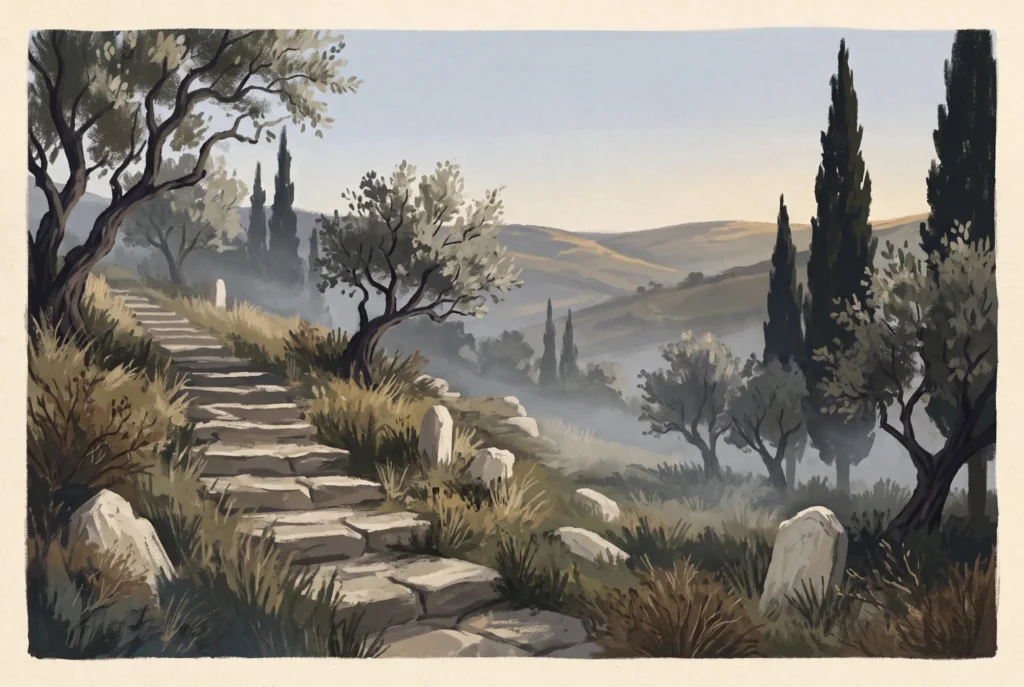
The classic approach is from the top. Walk to the end of HaAri Street, past the Ari Sephardi synagogue, and take the stone stairs that drop below it; the blue platform of the Arizal is visible a third of the way down. A second way in is from below, by the military plot at the foot of Ma’alot Olei HaGardom, the long stair that divides the Old City; the Yehezkel HaMeiri lookout there frames the kabbalists’ tombs against Mount Meron.
On the upper path sits the Ari’s mikveh, a small stone building over a natural spring in which tradition says the Arizal immersed. The pool is tiny, about a metre and a half square inside a cave, and holds four men at a time. The water is unheated spring water: refreshing in August, shocking in January. It is open around the clock, free (there is a tzedakah box) and for men only; the gate sign says so, simply because men are immersing inside. Bring a towel, and keep it short when there is a queue (Friday afternoons, festivals, Lag BaOmer, 5 Av).
Two traditions cling to the spring: a promise in the Ari’s name that whoever immerses here will come to teshuvah before he dies, and Rabbi Chaim Vital’s account of the Ari’s funeral, when his body, carried to the spring, rose and immersed itself. From that day, it is said, Safed has immersed its dead before burial. Kohanim should know the mikveh sits at the cemetery’s edge; the rabbi of Safed once approved one upper path as clear of graves, so ask locally.
Who’s who: the sages of the 1500s
Each name links to its page in our Sages of Tzfat section, and every hilula is on the hilula calendar.
The Arizal (Rabbi Yitzchak Luria), hilula 5 Av. He lived in Safed barely two years and died in 1572, reportedly in an epidemic, not yet forty, leaving almost nothing in writing. His kever sits on a raised blue platform mid-slope with a glassed-in eternal flame. Beside him lies his son Rabbi Moshe Luria; a tree grows straight out of the son’s grave, its branches hung with kvitlach (prayer notes) tied in plastic bags.
Rabbi Yosef Karo, hilula 13 Nisan. Author of the Shulchan Aruch, he died in 1575 at about 87. His grave is lower down the slope beneath a lone tree and is the pilgrims’ second great goal. Visit his synagogue first; the two places speak to each other.
The Ramak (Rabbi Moshe Cordovero), hilula 23 Tammuz. The systematiser of Kabbalah, author of Pardes Rimonim and Tomer Devorah, died in 1570; by tradition the Ari arrived on the day of the funeral and alone saw a pillar of fire following the bier. His kever is just below the Ari’s platform.
Rabbi Shlomo Alkabetz. Composer of Lecha Dodi, the hymn with which every synagogue now welcomes Shabbat, and the Ramak’s brother-in-law. His death year is disputed (1576, 1580 or 1584), and no hilula date is recorded. He lies beside the Ari.
The Radbaz (Rabbi David ibn Zimra), hilula 21 Cheshvan. Chief rabbi of Egypt, in whose Cairo yeshiva the young Ari studied, he came to Safed in old age and died there in his nineties; most sources say 1573, some 1589. His grave was lost to earthquake and erosion, and the stone now shown beside the Mabit in the Ari’s plot is a modern re-identification.
The Mabit (Rabbi Moshe di Trani), hilula 21 Nisan (some say 23 Nisan). Dayan of Safed for over fifty years and Karo’s colleague at the head of the beit din; he died in 1580 (some say 1585, in Jerusalem). His grave is beside the Ari.
Rabbi Moshe Alsheich, hilula 13 Nisan. Safed’s great preacher, Karo’s student and Chaim Vital’s teacher. He is buried in, or just above, the “Cave of the Elders,” a rock-cut cave a little south of the Ari with a blue tziyun (marker) over it; the exact spot is disputed. His hilula falls on his master’s day, so pilgrims visit both. His death year is uncertain (1593 in Safed, or 1600 in Damascus with burial here).
Rabbi Yaakov Beirav, hilula 1 Iyar. In 1538 he tried to restore the ancient semichah and the Sanhedrin from Safed; the attempt failed, but he ordained Karo and the Mabit (sources differ on who else). He died in 1546 and shares the Cave of the Elders with Alsheich.
Rabbi Elazar Azikri (died 1600). Author of Sefer Charedim and of Yedid Nefesh, sung at the third Shabbat meal; he lies near the Mabit. No hilula date is recorded.
Rabbi Yosef Sagis (died 1572). Head of a Safed yeshiva, Azikri’s teacher and co-signatory with Karo and the Mabit on many rulings. He almost certainly died in Safed, but we could not confirm a marked grave.
Later figures, traditions and the fallen
Rabbi Avraham Dov of Avritch, the Bat Ayin, hilula 12 Kislev. The Hasidic rebbe who led Safed’s Ashkenazim through the 1837 earthquake (the story of the corner of his synagogue that stayed standing is on our Avritch synagogue page). He died on 12 Kislev 5601 (December 1840) during a cholera epidemic; Safed tradition says he promised the plague would end with him. His cave is a short way below the Ari’s; a seudah on his hilula is kept as a segulah, above all for children.
Rabbi Leib Baal HaYissurim (“Reb Leibel”), hilula 15 Cheshvan. A disciple of the first Chabad Rebbe who spent his last years in Safed and died in 1836. Nobody knows how he earned the name “master of sufferings,” but before his death he promised that anyone with an insoluble trouble who came to his grave would be helped. His blue grave lies below the Olei HaGardom memorial and is busiest on Fridays (some come especially when Friday is Erev Rosh Chodesh); women come to pray for an easy birth. The Steipler Gaon, told of the promise, remarked that in that case all of Safed should be free of trouble.
The prophet Hoshea ben Be’eri (tradition). Pilgrims have been shown Hoshea’s grave here since at least 1522. The site now pointed out is the cemetery’s only domed structure, on the western side near the bottom of the slope, with his name on its inscription; the Ari, however, identified it as the cave of the tanna Rabbi Yehoshua ben Chananya, and both traditions are kept. Rabbi Pinchas ben Yair’s grave is lower still, past the new cemetery: a stone mound without a headstone inside a circular wall, under a fig tree hung with prayer notes.
Hannah and her seven sons (tradition). Safed tradition, recorded in the 1800s, places the Maccabean-era martyrs here; the exact spot is unknown, though a marked site is visited.
The fallen. The cemetery also holds victims of the 1929 riots and of First World War famine and epidemics, a section for those who fell in the 1948 siege of Safed, and an adjacent military cemetery with soldiers of the War of Independence. Near it lie the Olei HaGardom, seven Irgun fighters hanged by the British in Acre Prison in 1947: Dov Gruner, Yehiel Dresner, Mordechai Alkahi and Eliezer Kashani in April; Avshalom Haviv, Yaakov Weiss and Meir Nakar in July. The great stair above is named for them.
Who is NOT buried here
Internet lists are generous. Rabbi Chaim Vital, the Ari’s chief disciple, died in Damascus on 30 Nisan 5380 (1620) while preparing to return to Safed and is buried in the Jewish cemetery there (his tomb was vandalised in 2025); several Safed guides wrongly place him here. Rabbi Menachem Mendel of Vitebsk, who led the Hasidic aliyah of 1777 and lived for a time in Safed, died in Tiberias in 1788 and is buried there. Rabbi Yaakov Abulafia, Beirav’s grandson and a Damascus rabbi, sometimes appears on Safed lists; we could not verify his burial place and leave him out.
A 45-minute route
- Stairs below the Ari Sephardi synagogue (end of HaAri Street). The mikveh is near the top; men who wish to immerse should do it now (10 extra minutes).
- The Ari’s platform. Ari, his son Moshe and the tree of kvitlach, Alkabetz, the Radbaz, the Mabit and Azikri are within a few steps; the Ramak is just below.
- The Cave of the Elders, a little south on the same level: Alsheich and Beirav.
- Down the main path to Rabbi Yosef Karo under his tree. Rabbi Yitzchak Sternhartz, son of Reb Noson of Breslov, is said to lie beside him.
- The Bat Ayin’s cave, then Reb Leib’s blue grave just off the path.
- Hoshea’s dome near the bottom, then up the far side past the military plot and Olei HaGardom graves to the HaMeiri lookout, and climb Ma’alot Olei HaGardom back into the Old City.
Signs are mostly in Hebrew; anyone will point you to “kever HaAri.” For the Old City walk that ends here see our self-guided walk and the audio tours; guides who lead cemetery visits are under tours.
What a hilula day is like
A hilula (the anniversary of a tzaddik’s death, kept as a celebration of his soul’s rising) turns this quiet slope into a festival. On 5 Av, the Ari’s day, a large tent goes up with a women’s section, meals and Tehillim around the clock, and in some years about five thousand people have passed through in 24 hours. Candles burn in their hundreds in the metal boxes by the graves. On 13 Nisan the crowd is at Karo and Alsheich; on 23 Tammuz at the Ramak; on 12 Kislev and 15 Cheshvan at the Bat Ayin and Reb Leib. If you want silence, come another day; if you want the living tradition, come then.
Customs and etiquette
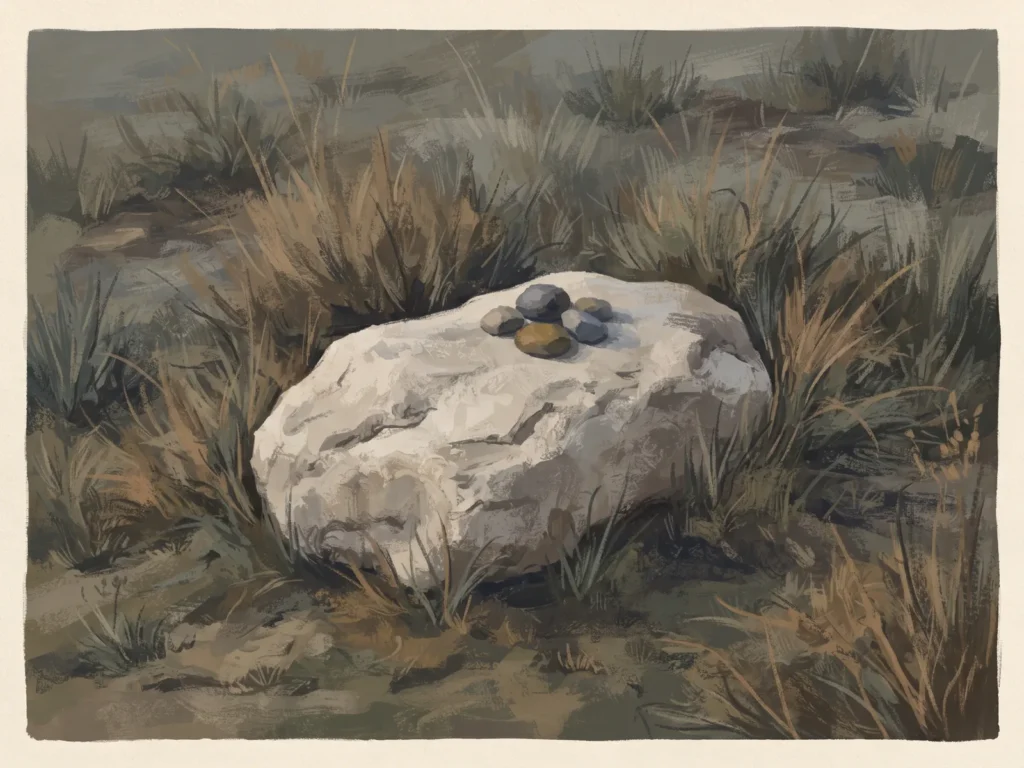
Visitors light a candle (sellers wait near the top), say Tehillim, write a kvitel with a name and mother’s name and tuck it into a crevice, give tzedakah into the boxes in the tzaddik’s merit, and leave a stone on the grave. Some circle Pinchas ben Yair’s grave seven times reciting Ana BeKoach; some, following the Ari, touch the spring water to their clothes rather than dry it off. The prayer is to God in the merit of the tzaddik, asking him to intercede, never to him.
- Dress modestly: covered shoulders and knees, a head covering for men.
- Men and women pray on separate sides of the Ari’s and Karo’s platforms; follow the signs.
- Do not step on graves. With graves under the soil and under the paths, stay on the built walkways.
- Photography of stones and views is fine; do not photograph people praying without asking, and put the phone away on hilula days.
- Kohanim may not enter; see the mikveh note above.
- Opening: open ground, no gate, no fee, 24 hours. Come between dawn and dusk unless it is a hilula; paths are unlit, steep and slippery after rain, with long flights of steps. There is no wheelchair access to the graves. Wear real shoes and carry water.
- Getting there: a short walk downhill from the Old City; see getting to Tzfat and things to do. All kevarim in and around the city are listed on the site.
Keep reading
Frequently asked questions
Where exactly is the Arizal’s grave? In the Old Cemetery on the western slope below the Old City, about a third of the way down, on a raised blue platform with an eternal flame. Take the stairs beside the Ari Sephardi synagogue at the end of HaAri Street; the platform is visible from the top.
Why are the graves in Safed painted blue? Tradition reads the blue as the colour of heaven and of the techelet thread, and as protection from the evil eye; it marks the graves of tzaddikim. The painting as you see it today dates from the restoration of the 1990s.
Can women use the Ari’s mikveh? No. The spring-fed pool is tiny and in constant use by men, and the gate sign says men only. Women’s mikvaot in the city are listed on our mikvaot page.
Is Rabbi Chaim Vital buried in Safed? No. He died in Damascus in 1620 and is buried there. As the Ari’s chief disciple and the source of most of what we know about these sages, he keeps appearing on lists by mistake.
Is the cemetery open at night, and is it safe? It is open ground with no gate, and many pilgrims come at night, especially on hilulot, but the paths are unlit and steep; go with company and a torch.
Can I visit in a wheelchair or with a pushchair? Not realistically; every route to the main graves involves long flights of steps. The Yehezkel HaMeiri lookout at the foot of Ma’alot Olei HaGardom gives a view over the tombs from the road.
Sources
- Letters from the Land of Israel, incl. the 1495 letter of an Italian disciple of Rabbi Ovadia of Bartenura (torahdownloads.com, PDF) — 1495 description of Safed and the burial caves of the pious around it.
- Posen Library, Moses Basola, Travels in the Land of Israel (1521–23) — “a house built on the grave of Hosea ben Be’eri” at the end of the Jewish graves outside Safed, 1522.
- Meir Nakar (Wikipedia) — hanged 29 July 1947 with Haviv and Weiss, buried in Safed the next day.
- Ancient cemetery in Tzfat (Israel National News) — layout, blue tombs, 1948 plot, approach from the Ari Sephardi stairs, Azikri, Reb Leib.
- ynet: בית העלמין העתיק בצפת — route order, Beirav’s cave, Hoshea’s building, Reb Leib’s blue grave and childbirth custom, Olei HaGardom (seven of twelve), 1990s restoration.
- Safed Cemetery (Atlas Obscura) — blue paint begun in early-1990s restoration, archaeologists’ concern, epitaph mapping, “sleepers.”
- Tzfat cemetery (rashbi.org) — grave positions, Moshe Luria’s tree, Bat Ayin cave, R’ Yitzchak of Breslov beside Karo, hilula dates.
- The Ari Mikve (safed.co.il) — hours, size, men only, cold spring, legends, etiquette.
- Historical Sites of Safed (Jewish Virtual Library) — 1837 mass graves, 1929 and WWI victims, burial ended 1962, Ari’s immersion legend and Safed burial custom.
- Hayyim ben Joseph Vital (Wikipedia) — death in Damascus 30 Nisan 5380, burial there, 2025 vandalism.
- Joseph Karo (Wikipedia) — death 13 Nisan 5335, age.
- Hacham David Ben Zimra (hyomi.org.il) and Radbaz (Wikipedia) — 21 Cheshvan 5333, burial in Safed.
- Hacham Moshe Alshich (hyomi.org.il) and Zissil: Rabbi Moshe Alshich — 13 Nisan hilula, Cave of the Elders, death-year disagreement.
- Zissil: Rabbi Yakov Beirav — 1 Iyar 1546, semichah, cave shared with Alsheich.
- Zissil: Rabbi Moshe di Trani and Wikipedia — 23 Nisan hilula (Zissil, rashbi.org; the site owner’s verified table prefers 21 Nisan), 1580/1585 discrepancy, 54–55 years on the Safed beit din, Azikri buried near him.
- Reb Leib Baal HaYissurim (rashbi.org) and Kikar HaShabbat — 15 Cheshvan 1836, Chabad background, the promise, the Steipler’s remark.
- Sagis (Encyclopaedia Judaica via encyclopedia.com) — death 1572, Azikri as student.
- COLlive: tent for Arizal visitors — what 5 Av looks like.
- Dov Gruner (Wikipedia) — burial in Safed, April 1947 hangings.
- yeshiva.co: Cohen and the Ari mikveh — kohanim and the upper-path ruling.
- Lonely Planet: Tombs of the Kabbalists — covered walkways, HaMeiri lookout, mikveh gate sign.