
Tzfat (Safed) works well with children if you accept two facts: the Old City is a hill of staircases, and what kids remember here is small and sensory. Wax animals in a candle shop, cheese being made behind a doorway, a cannon that was mostly noise, a park on a Crusader castle, a lake half an hour away. Here is what holds a child’s attention, how to handle strollers, where to eat and sleep, and how to pace a day or two. (Ashkenazi speakers say “Tzfas”; older maps write “Zefat” or “Tsfat”. Same hill.)
The terrain: strollers versus carriers
Safed sits around 900 metres up in the Upper Galilee and the Old City is built down a slope. The long staircase of Ma’alot Olei HaGardom divides it, and almost every lane off it is steps, cobbles or both. A stroller gets you along Jerusalem Street (the pedestrianised ridge), around the Citadel park, and along Keren HaYesod Street above the cemetery. It will not get you into the synagogue quarter or the Artists’ Quarter alleys.
Bring a carrier or sling for anyone under three. Children of five and up usually treat the stairs as a game, for the first hour at least. Stop every forty minutes; our Old City walk notes toilets at the foot of the Citadel steps and by the Abuhav Synagogue.
Candles and cheese: the two visits children ask to repeat
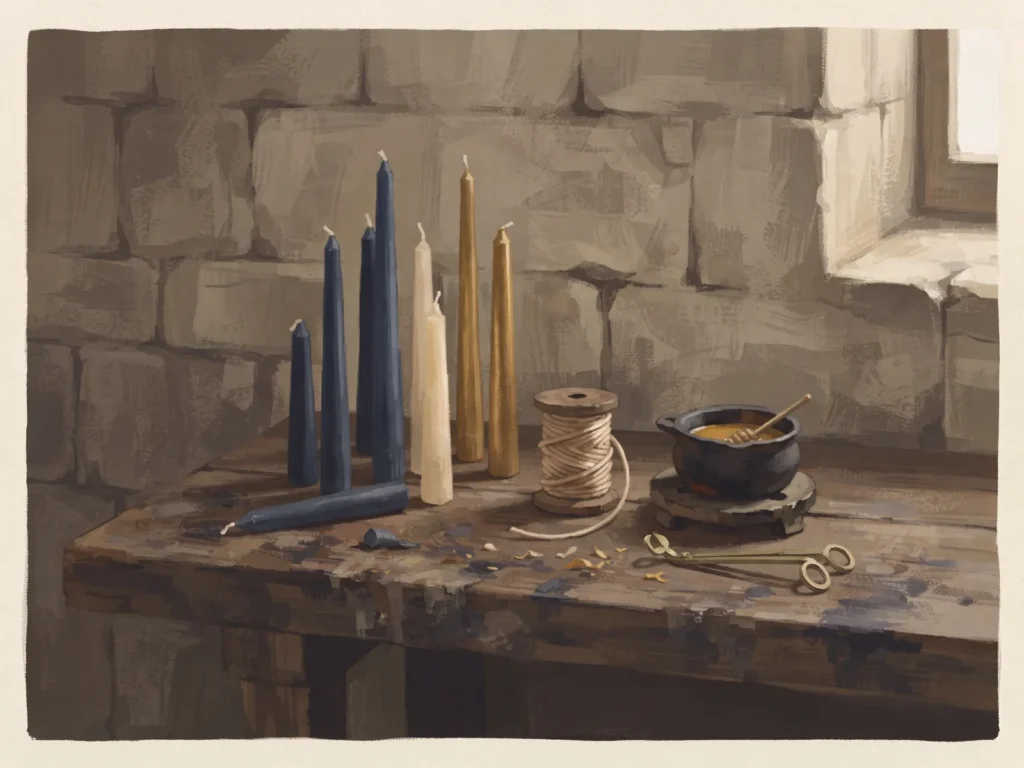
The Safed Candles gallery, beside the Ari Ashkenazi Synagogue, is the surest hit in the Old City. The draw is not the candles but the beeswax sculptures: a Noah’s Ark crowded with animals, a chess set of Jewish figures, a model of the Temple. Founded in 1991, the gallery burned in October 2008 and reopened in old stone rooms uncovered during renovations. Whether you can still watch havdalah candles being braided is unclear; sources contradict each other, and bulk production left the Old City years ago. Treat it as a shop with a free wax museum; check before you go if a demonstration matters.
Tzfat cheese, the salty white tzfatit in every Israeli fridge, started here in 1840 with the HaMeiri family. The HaMeiri dairy on Keren HaYesod Street runs a Friday tour with tasting that is open to families (reportedly in Hebrew; groups book ahead), and its entrance hall is a small museum. For a quicker, child-sized version, the Kadosh dairy a few minutes away off HaAri Street is a working room and a shop: watch cheese being made for a few minutes, taste, leave with ice cream. Arrive before noon; hours are informal, so check before you go.
The Citadel park and the playgrounds
Gan HaMetzuda, the park on the summit, is the family anchor: free parking, toilets and drinking fountains at the entrance, grass under the trees, and the ruins of one of the largest Crusader castles in the Levant to scramble over. Hold hands near the lookouts; the edges drop.
For play equipment, the Old City has one purpose-built playground, known locally as HaGan HaKasum (“the magic garden”), on Alkabetz Street above the Yosef Caro Synagogue: tubes, slides and climbing frames on stone, no grass. Gan HaIr, at the corner of Jerusalem and HaAri Streets, is the main shaded town playground. A smaller, semi-private park maintained by neighbours sits behind the Saraya (Wolfson Center), where residents of the old-age home opposite sit and watch the children play.
Stories for school-age kids: the Davidka and the Old Cemetery
At the top of the great staircase stands a Davidka, the improvised Haganah mortar of 1948. Tell children the truth: it was fired in the May 1948 battle, historians doubt it did much damage, and its real weapon was a terrifying bang. Look for bullet scars on nearby walls; a recorded narration plays beside it. The Palmach’s night assault on the Citadel, told in our 1948 Battle for Safed page, is history a ten-year-old retells at dinner.
The Old Cemetery is not for toddlers, but with children of about eight and up it is a quiet, story-rich hour: the blue-painted kevarim (graves) of the Arizal and Rabbi Yosef Karo, the pebbles and candle stubs left by pilgrims, the seven Olei HaGardom. Ask children to match the quiet of the people praying; our free audio tours narrate the walk.
Two small pleasures for any age: Simtat HaMashiach, a lane whose plaque tells the folk story of a grandmother who waited daily to welcome the Messiah, and the Artists’ Quarter, where it is worth asking whether a studio will give children a short hands-on session (check events for scheduled workshops).
Day trips: Meron, Nachal Amud, the Kinneret and the cranes
Drive times below are rough estimates from the Old City; check a map app before you set out.
Mount Meron summit trail (about 20 minutes’ drive): a 2.5 km loop near the 1,208-metre summit, about two hours through forest to lookouts over Safed, with picnic tables and water at the car park. Rated family-friendly; it suits children who can manage a two-hour walk. Bring layers.
Nachal Amud Nature Reserve (about 15 minutes): a 2.8 km there-and-back to the stream, or a 4.1 km loop with real climb. The shallow pools are the point for children; wear water sandals and use a sling, not a stroller. Entry is ticketed and the long trail closes to entrants in early afternoon.
Kinneret beaches (25–30 minutes): Amnon Bay and Hukuk North (Hukok) on the northern shore are family beaches, lifeguarded in season, free on foot (paid parking), with shade, showers and, at Hukuk, a playground.
Agamon HaHula (about 35 minutes): the winter spectacle of the north. Cranes begin arriving in October, tens of thousands pass through, a large share (counts vary by year and source, from about 15,000 to 40,000) stay the winter, and they leave in early to mid-March; November through February is the safe window. Farmers scatter about two tons of maize a day to keep them off the fields, which is why they gather so densely. Entry is ticketed; walk the roughly 9 km circuit, or rent bicycles or a golf cart; the tractor-pulled camouflaged wagon gets closest but is awkward with babies, for whom the Hula Nature Reserve next door (2.2 km path) is easier. Last entry is mid-afternoon in winter.
A car makes these realistic with children; options are in getting to Tzfat.
Food that works
Nearly everything in the Old City is kosher, and children do fine on it: falafel on Jerusalem Street, pizza and pasta at the dairy cafés, kosher ice cream along the ridge. Meat and dairy places are separate, so a burger and a pizza mean two counters. Carry water. See the restaurants directory.
Where families stay
The best base is an apartment or tzimmer (Israeli guest cabin) with a kitchen and a short walk to Jerusalem Street so you can retreat for naps. Many Old City hosts offer cots and Shabbat meals; the moshavim around Safed offer gardens at the cost of a drive. Browse accommodations. Families weighing a longer stay: see the schools section of living in Tzfat.
Shabbat with kids
Shabbat is the easiest time to have children in Safed. From Friday afternoon the Old City has no cars, so the lanes become a safe playground, and singing from a dozen synagogues carries through the stone. Shops and sites close until Saturday night, so buy food on Friday morning. Hospitality is real; many families are invited to a meal through their hosts, and children are welcome in synagogues. Details in Shabbat in Tzfat.
Safety
Heat is the main risk from June to September; the Old City has little shade between 11 and 4, so do the stairs early. Steps are uneven and often unrailed; the cemetery edge and the Citadel walls have unfenced drops. Synagogues ask for modest dress and head coverings for boys; paper kippot are at the door.
One day and two days with children
One day: Citadel park first (run, climb, picnic). Down Ma’alot Olei HaGardom past the Davidka; the Alkabetz Street playground; Safed Candles and the Ari Ashkenazi Synagogue; lunch on Jerusalem Street; Kadosh dairy for ice cream, or the Kinneret if it is hot.
Two days: Day one as above, ending with sunset from the Citadel. Day two: Meron or the Nachal Amud pools in the morning (the Hula cranes in winter), HaMeiri dairy if it is Friday, a rest, then the Old Cemetery with older children or the Saraya playground with younger ones.
What to skip with toddlers: the cemetery slopes, the inner alleys with a stroller, the long Nachal Amud loop, the Agamon wagon, and the Artists’ Quarter galleries. See things to do in Tzfat for what the adults will want to come back for.
Frequently asked questions
Is Safed stroller-friendly? Only along Jerusalem Street, the Citadel park and Keren HaYesod Street. The synagogue quarter, the Artists’ Quarter alleys and the Old Cemetery are staircases and cobbles. A carrier or sling is far more useful than a stroller for children under three.
Can children watch candles being made at Safed Candles? The wax sculptures are always on display and are what children remember. Whether braiding is still demonstrated in the shop is unclear; main production moved out of the Old City years ago. Call ahead if a demonstration is the point of your visit.
Can we visit the Tzfat cheese dairy with kids? Yes. The HaMeiri dairy runs a Friday tour open to families and a small museum; groups book in advance. The Kadosh dairy is a drop-in: watch cheese being made through the doorway, taste, and buy ice cream. Both keep informal hours, so check before you go.
When can we see the cranes at Agamon HaHula? The first cranes arrive in October, tens of thousands winter in the valley, and they leave in early to mid-March. November to February is the dependable window; last entry is mid-afternoon in winter.
Is Safed a good place for a family Shabbat? Very. The Old City is car-free from Friday afternoon, hospitality is widespread, and the quiet is restful with small children. Shops and sites close, so stock food on Friday morning and book any Shabbat meals in advance.
Sources
- Safed Candles — Zissil — 1991 founding, 2008 fire, wax sculptures, contradictory statements on braiding demonstrations, factory closure
- Safed Candles — safed.co.il — location beside Ari Ashkenazi, production moved out of the Old City, 2008 fire and rebuilt rooms
- HaMeiri Dairy — Zissil — 1840 founding, Friday tour open to families, museum hall, advance booking for groups
- Safed Cheese and Original Dairies — israel-in-photos — Kadosh dairy as a drop-in working room, informal hours, ice cream; HaMeiri Friday noon tour in Hebrew
- Parks and Playgrounds — safed.co.il — Gan HaIr, the Alkabetz Street playground, Wolfson/Yigal Allon park behind the Saraya, Citadel park
- Safed attractions for moms and kids — israel-best-trips — Citadel free parking, restrooms and water fountains; Davidka English recording and gunshot marks; Simtat HaMashiach plaque
- Easy family route in Safed — weekend.co.il (Hebrew) — half-day family route from the Citadel via Davidka and the synagogues
- Mount Meron Summit Trail — israel-in-photos — 2.5 km loop, ~2 hours, 1,208 m, picnic tables and water, family-suitable
- Amud Stream Nature Reserve — israel-in-photos — upper-section trail lengths, pool depths, sling not stroller, fees and entry cut-off times
- Hula Lake Park — KKL-JNF — bikes, golf carts, camouflaged wagon, two tons of maize daily, last entry 16:00 / close 17:30 (from Oct 2023); c. 35,000 arrive in autumn, c. 15,000 winter
- Approximately 20,300 cranes counted at Hula Lake Park — KKL-JNF (2025) — 2025 count, most expected to stay the winter
- First cranes of the fall migration arrive — Times of Israel — October 2022 arrival, 80,000–90,000 passing through Israel, 30,000–40,000 wintering in Israel, departure early to mid-March
- Agamon Hula vs Hula Nature Reserve — israel-in-photos — 9.6 km circuit, 2.2 km reserve path, wagon unsuitable with babies, Agamon entry 35/21 NIS and reserve 28/14 NIS (2022)
- Kadosh Dairy — Zissil — location off HaAri Street at the base of the Old City; family cheese-making for about a century
- Beaches of the Sea of Galilee — Ynetnews — Amnon Bay and Hukuk North: free on foot, paid parking, lifeguards, shade, playground
- Davidka Monument — safed.co.il — the mortar, its noise, 1956 unveiling (as used in the site’s Old City walk page)