Tzfat (Safed) is the Hebrew name צְפַת, and the usual explanation ties it to the root צ-פ-ה, “to look out” or “to watch”: a lookout on a hilltop, which is exactly what the city is. “Safed” is the same name as it reached English through Arabic and Crusader Latin, “Tzfas” is the Ashkenazi pronunciation, and “Zefat” and “Tsfat” are two generations of Israeli road-sign spelling. All of them point to the highest city in Israel.
The Hebrew name and what it means
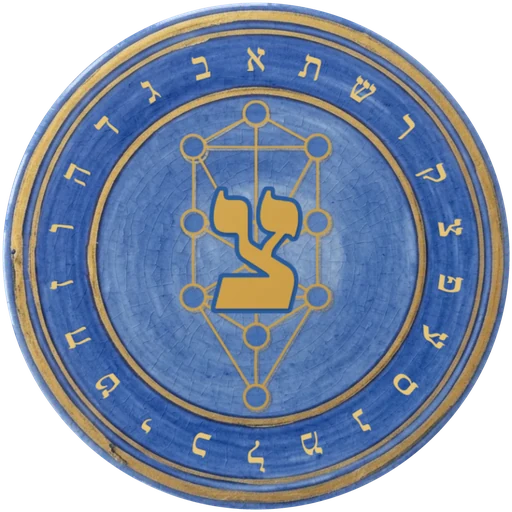
Written in Hebrew, the name is three letters: צפת, vocalised צְפַת. The first vowel is a barely-there shva, so the word is close to one syllable: “TSFAHT”. No ancient text explains the name, so what follows is inference, not record.
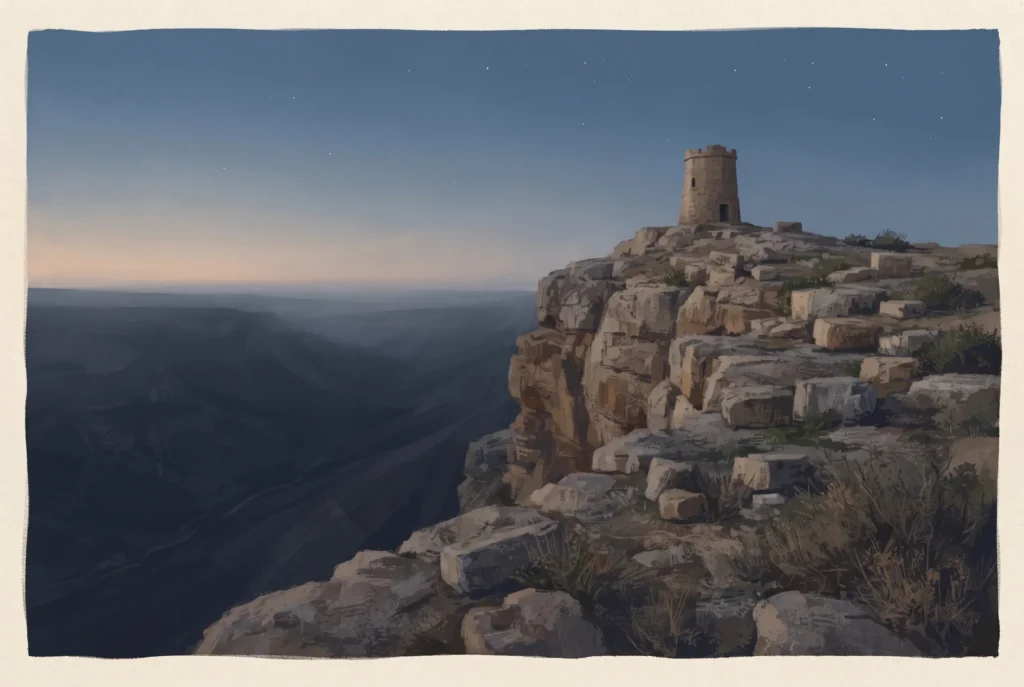
The explanation you will hear from most guides connects צפת to the verb צָפָה, to look out or keep watch, the same root as mitzpeh, a lookout point. The citadel summit stands at roughly 835–846 metres (sources differ) and the city climbs to about 937 metres; on a clear day you see the Kinneret, the Golan, Mount Meron and, in winter, snow on the Hermon. A watch-post name fits the geography so well that it has become the standard reading.
One caveat: ancient Semitic place names are often older than the languages that later explained them, and no inscription or early source spells out the meaning. Treat “lookout city” as a strong, sensible reading rather than a proven fact.
Two other explanations should be labelled for what they are. Some teachers connect the name to litzpot, “to foresee”, a homiletic reading that suits a city of mystics. And the biblical Tzefat of Judges 1:17, a Canaanite town renamed Chormah, is a different place in the south; later writers borrowed its name for the Galilee city.
Where the name first appears
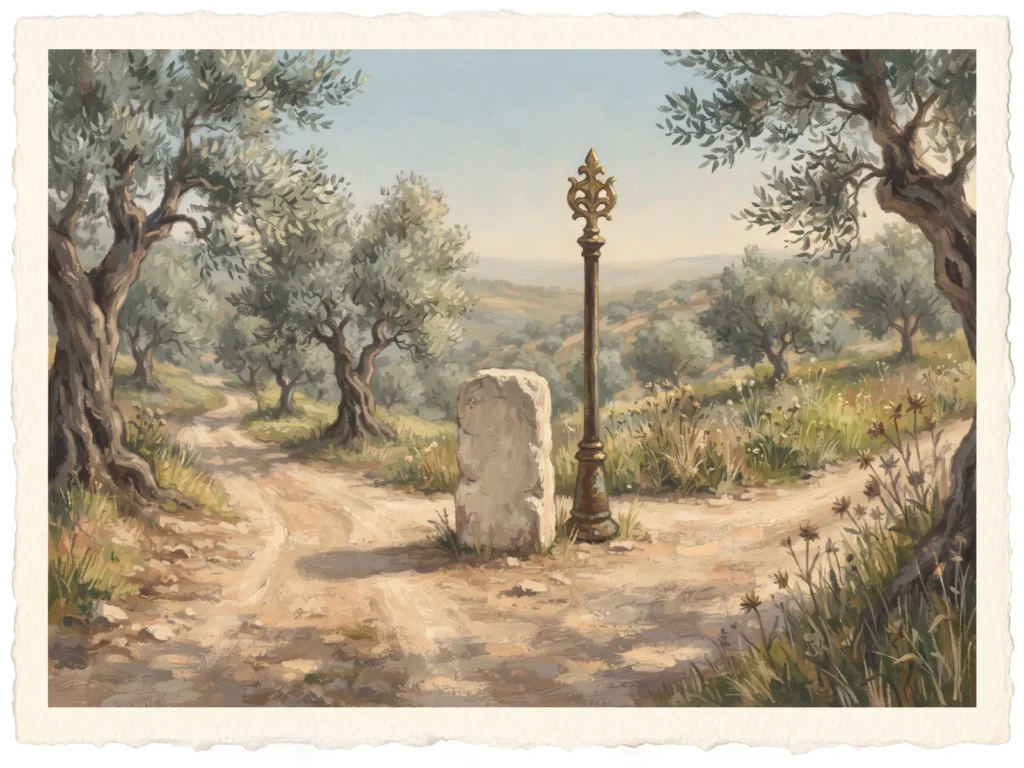
The Hebrew Bible never mentions Safed. The first candidate is Josephus, who in The Jewish War (2:573) lists the Galilean towns he fortified in 66 CE, among them Seph (Greek Σέπφ) in Upper Galilee. Many historians identify Seph with Safed, but cautiously: the name is missing from the parallel list in Josephus’s Life, so the match rests on sound and location.
The first clear Hebrew mention is in the Jerusalem Talmud, Rosh Hashanah 2:1, and it is often misquoted. The Mishnah (Rosh Hashanah 2:4) lists the mountains where beacon fires announced the new moon: the Mount of Olives, Sartaba, Grofina, Hauran and Beit Baltin. Safed is not on that list. Tzefat appears in the Gemara’s discussion (the text is on Sefaria under Jerusalem Talmud Rosh Hashanah 2:1), where Rabbi Zeira asks Rabbi Abbahu whether those who can see Tzefat should still light beacons after Rabbi Yehudah HaNasi discontinued the practice. So Safed belongs to the beacon story as a hilltop visible across the Galilee, not as one of the five stations the Mishnah names.
A little-known detail: two kinot (laments) by Eleazar Kallir, a poet whose dates are debated but who is usually placed in the Byzantine era, name Tzefat as the place where the priestly families of Yakim and Pashchur settled after the destruction of the Temple. Long before the kabbalists, Safed was remembered as a town where kohanim settled. The earliest medieval document to use the name is a Cairo Geniza record from 1034 naming a man al-Safati, “of Safed”.
Saphet, Safad, Safed: how the Arabic and Crusader forms arose
Arabic renders the city صفد, Safad. Arabic has no “tz” sound, so the Hebrew tzadi became an emphatic “s” and the final tav softened to “d”. Classical Arabic ṣafad happens to mean “fetter”; any connection to the city is coincidence, and explanations built on it are folk etymology.
The Crusaders heard the Arabic name and wrote it in Latin and French: Saphet, Sephet, Castrum Saphet. The Crusaders began fortifying the hill soon after 1100; King Fulk of Anjou built or rebuilt the castle around 1140, King Amalric handed it to the Knights Templar in 1168, Saladin took it in December 1188, the Templars rebuilt it on a huge scale from 1240, and Baybars captured it in 1266. For more than a century “Saphet” was one of the most strategic place names in the Holy Land, so it appears in European chronicles long before Hebrew sources were widely read in the West.
That is why English says “Safed”. Ottoman administrators used the Arabic form, European travellers and mapmakers copied it, and the British Mandate inherited it. Sixteenth-century Jews here, incidentally, also called their town Beth-El, a name of praise that never displaced Tzfat.
Zefat and Tsfat: the road signs
Visitors are puzzled to see “Zefat” on an older highway sign and “Tsfat” on a newer one. Both romanise צפת. The older official system (the Academy’s rules of the 1950s) rendered tzadi with “z” (strictly a dotted ẕ), giving Zefat, still the form in many atlases and listed by Britannica. The Academy of the Hebrew Language’s 2006 rules prefer “ts”, giving Tsfat, which is gradually replacing the older signs. Everyday usage settled on “Tzfat”, no official system at all, but the spelling most English-speaking Israelis actually type. Tzfat, Tsfat, Zefat, Tzefat, Zfat, Sfat, Safed, Safad, Sefad, Tzfas: they all mean one place; treat them that way.
Tzfas: the Ashkenazi pronunciation
In Ashkenazi Hebrew a final tav without a dagesh is pronounced “s”, so Shabbat becomes Shabbos and Tzfat becomes Tzfas (also written Tsfas or Zfas). Yiddish writes the word with Hebrew letters, צפת, and says “Tsfas”. In the Old City you hear both daily: an Israeli neighbour says “Tzfat”, a Chassid says “Tzfas”, and nobody corrects anyone.
Plain pronunciation guide:
– Tzfat / Tsfat: “tsFAHT”, one quick syllable, the “ts” as in “cats”.
– Tzfas: the same, ending in “s”.
– Safed: “SAH-fed” or “sa-FED”; both are heard, neither is Hebrew. Arabic Safad is “sa-FAD”.
– Zefat / Tsfat: spellings, not pronunciations; say them as Tzfat.
“City of Kabbalah”: the nickname
Safed became the centre of Jewish mysticism in the sixteenth century, when exiles from Spain and Portugal gathered here and the Arizal, Rabbi Yosef Karo, the Ramak and Rabbi Shlomo Alkabetz taught within a few streets of one another. The slogan “City of Kabbalah” (Ir HaKabbalah) is far more recent, a modern label (we found no source dating its first use) that stuck because it is true. The sixteenth-century Jews of Safed would simply have called it a holy city. Read more at the sages of Tzfat and learning Kabbalah in Tzfat.
The four holy cities and the element of air
Safed is one of the Four Holy Cities with Jerusalem, Hebron and Tiberias. The grouping is not biblical. The Encyclopaedia Judaica says Safed’s sixteenth-century Jews already counted their town among the four, and the formal association dates from the 1640s, when the communities of Jerusalem, Hebron and Safed organised joint fundraising in the Diaspora; Tiberias joined after its refounding in 1740.
You will often read that each city corresponds to an element: Jerusalem fire, Hebron earth, Tiberias water, Safed air. It is a beautiful teaching, and it suits a town where the wind never quite stops. But it is a later, homiletic tradition: we found it in none of the classical sources, and the modern articles that present it cite classical texts (such as Sefer Yetzirah) only for the four elements themselves, not for the pairing of cities with elements. Enjoy it as a meditation, not as history. The full story is on our Four Holy Cities page.
Mount Canaan and the names of the neighbourhoods
Har Kna’an (Mount Canaan), rising to about 936–960 metres east of the Old City, takes its name from the ancient Canaanites. Townspeople walked up for the view in the seventeenth century, hotels followed in the twentieth, and a British police fort stood there in 1948. “Kna’an” is also a neighbourhood built after the War of Independence, home since the 1970s to Kiryat Chabad.
Other names on buses and maps: the Old City (HaIr HaAtika) and its Artists’ Quarter; Darom (South), a post-1948 housing area; Ibikur; Ramat Razim, Menachem Begin and Neve Oranim on the northern hills; Nof Kinneret on the slope facing the lake, near Rosh Pina; and Biriya, the moshav on the next peak, which Safed listings often fold in. Once you have your bearings, start with things to do in Tzfat, the landmarks and synagogues directories, the kevarim of the sages, or walk the Old City with our audio tours. Thinking of staying? See living in Tzfat.
Frequently asked questions
What does Tzfat mean in Hebrew? The name צְפַת is usually explained from the root צ-פ-ה, to look out or keep watch, so “lookout” or “watch-post”, fitting a city perched at about 900 metres above the Galilee. No ancient source states the meaning, so it is an educated and widely accepted reading rather than a documented one.
Is it Tzfat or Safed? Both are correct. Tzfat is the Hebrew name; Safed is the English form, which came through Arabic Safad and Crusader Saphet. Israelis speaking English usually say Tzfat; most guidebooks and maps say Safed.
How do you pronounce Safed? In English, “SAH-fed” or “sa-FED”; both are common. The Hebrew name is “tsFAHT”, nearly one syllable, with “ts” as in “cats”. Ashkenazi speakers say “tsFAHS”.
Why do road signs say Zefat or Tsfat? They are two official romanisations of the same Hebrew letters. “Zefat” follows the older Israeli system; “Tsfat” follows the newer Academy of the Hebrew Language rules. Neither changes how the name is said.
Is Safed mentioned in the Bible or the Talmud? Not in the Bible. Josephus may refer to it as “Seph” in 66 CE, and the Jerusalem Talmud (Rosh Hashanah 2:1) names Tzefat in its discussion of the new-moon beacon fires, though it is not one of the five stations the Mishnah lists.
Sources
- Safed – Wikipedia (English) — spellings (Tzfat, Tsfat, official Zefat, Arabic Safad), Josephus Sepph, Yerushalmi beacon mention, William of Tyre’s Castrum Saphet, the 1034 Geniza “al-Safati”, Mount Canaan, elevation 937 m.
- Safed – Encyclopaedia Judaica via Encyclopedia.com — Josephus Wars 2:573 and the missing parallel in Life 187–8; Yerushalmi RH 2:1 (58a); Kallir’s kinot “Eikhah Yashevah” and “Zekhor Eikhah” placing Jakim and Pashhur in Safed; Crusader chronology 1140–1266; “Beth-El” and the Four Sacred Cities in the 16th century; Mount Canaan 920 m. (Note: EJ, like most summaries, says Safed was “one of the mountaintop points from which fire signals were given”; the Mishnah’s own list omits it.)
- Safed – Jewish Virtual Library — parallel EJ text; spelling list including Talmudic forms.
- Jerusalem Talmud Rosh Hashanah 2:1 – Sefaria — primary text: “R. Zeira asked before R. Abbahu, should those who see Safed light a beacon? … Rebbi disestablished the beacons” (Guggenheimer translation).
- Yerushalmi Rosh Hashanah 2:1 – Dafyomi Advancement Forum — places R. Zeira’s Tzefat question in halakha 1 (its “daf 11b”) and the Mishnah’s five beacon stations in halakha 2.
- Fire on the mountain: the new moon beacons – JHOM — Mishnah RH 2:2–4 station list; confirms Safed is not among them.
- Zefat Fortress – BibleWalks — root tsafa “overlook/lookout”; citadel summit 846 m; Josephus Wars 2:20:6 “Seph”; PEF survey’s Talmudic “Tzephath”; Saphet among Teutonic fiefs; Sanuto’s “Sephet” (1322).
- היסטוריה וארכיאולוגיה של צפת – Hidabroot — the lookout explanation as one of several; Yerushalmi beacon mention; alternative rabbinic identifications (Kedesh, Kartan) treated here as non-standard.
- Early Safed History – Zissil — Josephus “Seph/Zeph”; biblical Tzefat/Chormah as a different town; comprehensive spelling list (Ashkenazi, Sephardi, historical).
- Four Holy Cities – Wikipedia — the grouping arose in the 1640s as a fundraising association; Tiberias joined after 1740; no elements tradition recorded.
- The Four Elements and the Four Holy Cities – Aish — example of the Jerusalem/fire, Hebron/earth, Tiberias/water, Safed/air teaching; cites Sefer Yetzirah and Tanya for the four elements, but no classical source for the city pairings.
- Tzfat: The City of Air and Kabbalah – Aish — “City of Air” usage; the homiletic “litzpot, to foresee” reading.
- Safed – Encyclopaedia Britannica — headword “Safed” with Ẕefat, Safad and Tzfat as variants; Mount Canaan 960 m; the 1948 police post.
- Canaan Neighborhood – Zissil — post-1948 Canaan and Darom neighbourhoods; Kiryat Chabad from the early 1970s; names Ibikur, Ramat Razim, Menachem Begin, Neve Oranim, Biriya (does not mention Nof Kinneret).
- Mount Canaan – AroundUs — Har Kena’an 936 m, Har Biriya 955 m; etymology of “Canaan”.
- Romanization of Hebrew – Wikipedia — Academy table: older rules render tzadi as ẕ, 2006 rules as ts; “Tsfat” used as an example.
- The Wars of the Jews 2.573 – Lexundria (Whiston) — “and to Seph, and Jamnith, and Meroth” among the Upper Galilee places fortified; Life 188 names only Jamnia, Meroth and Achabare in Upper Galilee.
- צפת – Hebrew Wikipedia — Crusader building 1102–1103, Templars 1168, Saladin’s siege Nov–Dec 1188, 1240 rebuild, Baybars 1266; 1023/1034 Geniza “al-Safati”; sixteenth-century Jews calling the town Beth-El; neighbourhoods (Ramat Razim, Menachem Begin, Neve Oranim, Ibikur, Nof Kinneret); 937 m on Mount Canaan; no discussion of the name’s etymology.