Hilula calendar of the sages of Tzfat
The yahrzeits of the sages buried in and around Tzfat — Meron, Amuka, Ein Zeitun and Tiberias — by Hebrew month. Dates are given by the Hebrew calendar; each hilula begins the evening before.
Cheshvan · חשון
- ט״ו בחשוןReb Leibel Baal HaYissurimTzfat· This year: Monday, 26 October 2026
- כ״א בחשוןThe RadbazOld Cemetery, Tzfat· This year: Sunday, 1 November 2026
Kislev · כסלו
- י״ב בכסלוThe Bat AyinOld Cemetery of Tzfat· This year: Sunday, 22 November 2026
- כ״ז בכסלוThe Be’er Mayim ChaimTzfat· This year: Monday, 7 December 2026
Tevet · טבת
- כ׳ בטבתThe RambamTiberias· This year: Wednesday, 30 December 2026
Shevat · שבט
- ד׳ בשבטRabbi Avraham of KaliskTiberias· This year: Tuesday, 12 January 2027
Nisan · ניסן
- י״א בניסןThe Shelah HaKadoshTiberias· This year: Sunday, 18 April 2027
- י״ג בניסןThe Alshich HaKadoshOld Cemetery, Tzfat· This year: Tuesday, 20 April 2027
- י״ג בניסןRabbi Yosef KaroOld Cemetery, Tzfat· This year: Tuesday, 20 April 2027
Iyar · אייר
- א׳ באיירRabbi Menachem Mendel of VitebskTiberias· This year: Saturday, 8 May 2027
- א׳ באיירRabbi Yaakov BeiravOld Cemetery, Tzfat· This year: Saturday, 8 May 2027
- י״ד באיירRabbi Meir Baal HaNesTiberias· Hilula · by tradition· This year: Friday, 21 May 2027
- י״ד באיירRabbi Yehuda bar IlaiEin Zeitun, near Tzfat· Hilula · by tradition· This year: Friday, 21 May 2027
- י״ח באיירRabbi Shimon bar YochaiMeron, near Tzfat· Hilula · by tradition· This year: Tuesday, 25 May 2027
- כ״ו באיירThe RamchalTiberias· This year: Wednesday, 2 June 2027
Sivan · סיון
- ט׳ בסיוןRabbi Yisrael of ShklovTiberias· This year: Monday, 14 June 2027
- כ״ו בסיוןYonatan ben UzielAmuka, near Tzfat· Hilula · by tradition· This year: Thursday, 1 July 2027
Tammuz · תמוז
- כ״ג בתמוזThe RamakOld Cemetery, Tzfat· This year: Wednesday, 28 July 2027
- כ״ט בתמוזRabbi Yochanan HaSandlarNear Meron· Hilula · by tradition· This year: Tuesday, 3 August 2027
Av · אב
- ה׳ באבThe ArizalOld Cemetery, Tzfat· This year: Sunday, 8 August 2027
Elul · אלול
- כ״ה באלולRabbi Elazar ben ShimonMeron, beside his father· Hilula · by tradition· This year: Monday, 27 September 2027
Tzfat (Safed) sits at the centre of the densest cluster of kevarim (graves of the righteous) in the Jewish world: the Ari, Rabbi Yosef Karo and the Ramak in the Old Cemetery below the city; Rashbi at Meron, twenty minutes west; Yonatan ben Uziel at Amuka, six kilometres north-east; Rabbi Meir Baal HaNes and the Rambam in Tiberias, half an hour south. Each has a hilula, a yahrzeit kept as a day of joy, fixed to a Hebrew date whose civil date moves every year. This page gives you the calendar, the customs, who is really buried where (and which burials are tradition rather than record), how to get there from Safed and how to behave when you arrive. Ashkenazi speakers say “Tzfas”; older maps write “Zefat” or “Tsfat”. It is all the same city.
What a hilula is, and why it is a “wedding”
A hilula (Aramaic for a wedding feast) is the anniversary of a tzaddik’s death kept not as mourning but as celebration. The idea comes from the Zohar’s account of Rabbi Shimon bar Yochai’s last day: a voice calls for the day of his passing to be marked as a feast, because the soul of a righteous person returns to its Source like a bride to her groom. Chassidic communities later extended the custom to their rebbes, and North African Jews to their own saints, but the Galilee is where it was born.
A hilula is always fixed by the Hebrew date; the civil date drifts by up to a month from year to year. The sites below are therefore listed by Hebrew date, and you should check the live calendar at cityoftzfat.com/hilula-calendar/ before you travel.
What people actually do at a kever
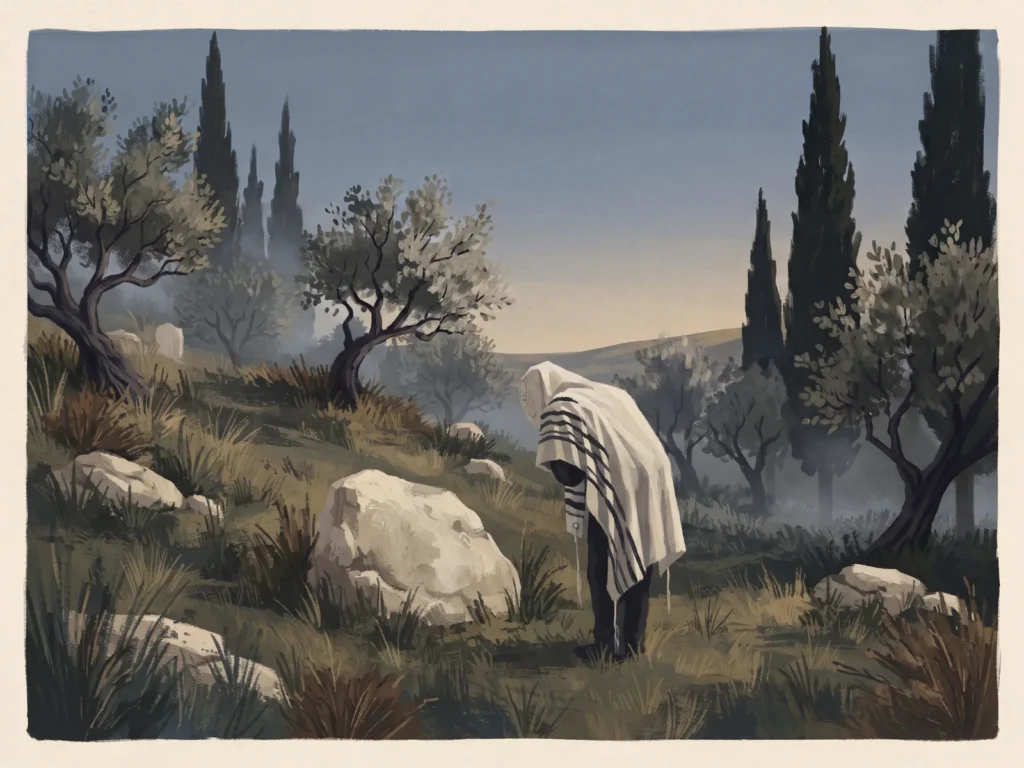
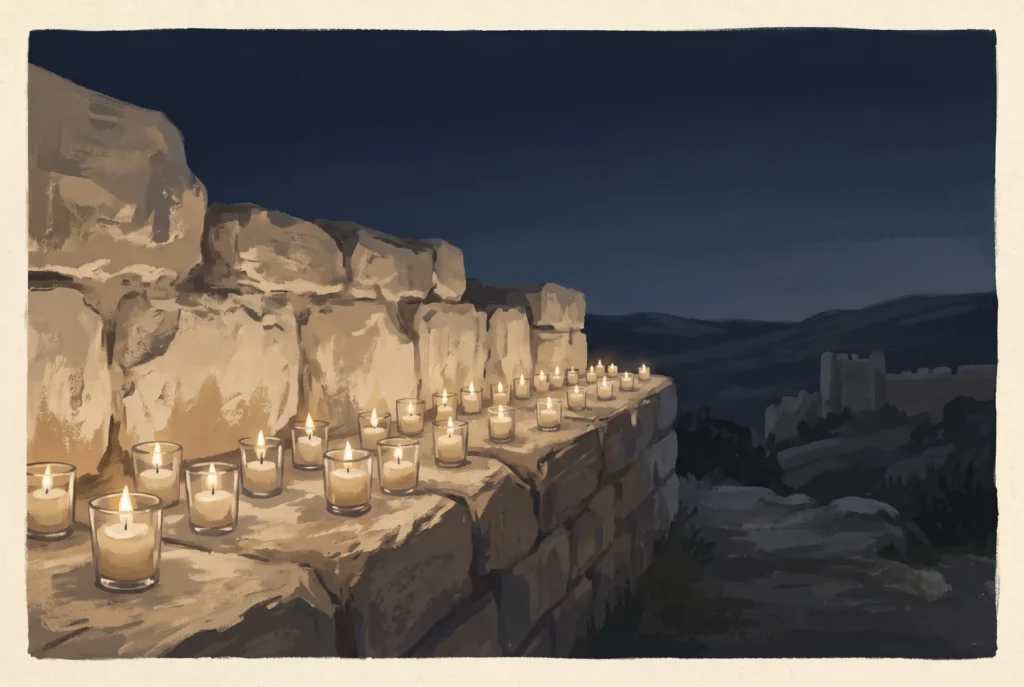
The customs are simple and almost everywhere the same. People light candles in the metal candle-houses provided, recite Psalms, say the tzaddik’s name and learn a passage from his writings. They give tzedakah into the charity boxes that line every holy site, and they make a seudah, a festive meal, sometimes with music and dancing into the night. Prayers are directed to God, with the tzaddik asked to intercede: praying “through”, not “to”, the departed.
Some sites have their own segulot (auspicious practices). At Amuka singles pray for a match. At Rabbi Meir’s tomb in Tiberias visitors say “Eloka d’Meir aneni” (“God of Meir, answer me”) and give to the poor in his name. At Rabbi Pinchas ben Yair’s grave in Safed and at Rabbi Yehuda bar Ilai’s at Ein Zeitim the custom is to circle the tomb seven times, with Ana b’Koach and a Psalm; at Ein Zeitim people also carry a splinter from the ancient tree behind the building as a charm for livelihood.
The Old Cemetery of Safed: who lies under the blue stones
The Old Cemetery spreads down the rocky western slope below the Old City and the Ari Sephardi Synagogue: about 120 dunams (some sources say 150), more than 4,000 inscribed stones, closed to new burials since 1962. The graves of the sixteenth-century kabbalists are painted the same sky-blue as the doorways in the alleys above them (the paint dates from a municipal restoration in the early 1990s), and visitors photograph them more than anything else in the city.
Documented burials, each with a marked stone:
- The Arizal, Rabbi Yitzchak Luria (d. 5 Av 5332, 1572): a raised platform in the middle of the cemetery with a glassed-in eternal flame. Beside it lies his son Rabbi Moshe; a tree grows from that tomb, hung with prayer notes in plastic bags. See the Arizal.
- Rabbi Yosef Karo, author of the Shulchan Aruch (d. 13 Nisan 5335, 1575), under a single tree down the slope to the left. See Rabbi Yosef Karo and the Yosef Caro Synagogue.
- The Ramak, Rabbi Moshe Cordovero (d. 23 Tammuz 5330, 1570), just below the Ari. See the Ramak.
- Rabbi Shlomo Alkabetz, author of “Lecha Dodi” (death year disputed: 1576, 1580 or 1584; no hilula date is recorded), beside the Ari. See Rabbi Shlomo Alkabetz.
- The Radbaz, Rabbi David ibn Zimra (21 Cheshvan; death year disputed, 1573 by most accounts, 1589 by some), beside the Ari; the stone now shown is a modern re-identification. See the Radbaz.
- The Mabit, Rabbi Moshe di Trani (d. 21 Nisan, some say 23 Nisan, 5340/1580), rabbi and dayan of Safed for over fifty years, beside the Ari.
- Rabbi Moshe Alshich (d. 13 Nisan, the same date as Karo; year uncertain, 1593 or later), Chaim Vital’s teacher in revealed Torah, in or above the “Cave of the Elders”, which he shares with Rabbi Yaakov Beirav (d. 1 Iyar 5306, 1546). His exact marker is disputed.
- The Be’er Mayim Chaim, Rabbi Chaim of Chernovitz (d. 27 Kislev; 1816 by most sources, though 1813 and 1817 are also given), in a cave left of Karo’s grave.
- The Bat Ayin, Rabbi Avraham Dov of Avritch (d. 12 Kislev 5601, 1840), who rebuilt Safed after the 1837 earthquake, in a cave down the path from the Ari, shared with the Levushei Serad (d. 22 Cheshvan) and, by local tradition, Miriam, daughter of Rabbi Nachman of Breslov. See the Avritch Synagogue.
Traditional burials, resting on pilgrim accounts and the Ari’s own attributions rather than inscriptions:
- Hannah and her seven sons, martyrs of the Maccabean era: by Safed tradition, somewhere in the cemetery; the spot is unknown.
- Hoshea ben Be’eri, the prophet: a traveller in 1522 already described a house built over his grave here. The cemetery’s only domed structure carries his name on its inscription, but the Ari identified it as the cave of the Tanna Rabbi Yehoshua ben Chananya. Both traditions are kept.
- Rabbi Pinchas ben Yair, Rashbi’s father-in-law (or son-in-law; sources differ): at the bottom of the hill past the new cemetery, a stone mound inside a circular wall with no headstone, at a spot the Ari is said to have pointed out. A fig tree at the entrance is hung with prayer requests.
- Reb Leib Baal HaYissurim (15 Cheshvan; some say 16), where women come on Fridays to pray for an easy birth.
Just above the cemetery is the Ari’s mikveh, a cold spring-fed pool where tradition says he immersed; Safed men still dip there on Friday afternoons, and by tradition the city’s dead are immersed in its water before burial. Men only. All sites are on the kevarim category page and the mikvaot page.
The calendar: main hilulot of Safed and the Galilee by Hebrew date
Civil dates below are for 5787 (2026–27), followed by 5788 (2027–28), from Hebcal. A hilula begins the evening before.
Text version of the calendar (5787–5788, for printing)
| Hebrew date | Tzaddik | Where | 5787 | 5788 | Note |
|---|---|---|---|---|---|
| 15 Cheshvan | Reb Leib Baal HaYissurim | Safed Old Cemetery | 26 Oct 2026 | 15 Nov 2027 | Local tradition; some say 16 Cheshvan |
| 21 Cheshvan | Radbaz | Safed Old Cemetery | 1 Nov 2026 | 21 Nov 2027 | Date per yahrzeit lists; death year disputed |
| 12 Kislev | Bat Ayin (R. Avraham Dov of Avritch) | Safed Old Cemetery | 22 Nov 2026 | 12 Dec 2027 | Documented |
| 27 Kislev | Be’er Mayim Chaim (R. Chaim of Chernovitz) | Safed Old Cemetery | 7 Dec 2026 | 27 Dec 2027 | Documented; year disputed |
| 20 Tevet | Rambam | Tiberias | 30 Dec 2026 | 19 Jan 2028 | Burial by tradition, early sources |
| 4 Shevat | R. Avraham of Kalisk | Tiberias old cemetery | 12 Jan 2027 | 1 Feb 2028 | Documented |
| 13 Nisan | R. Yosef Karo; also R. Moshe Alshich | Safed Old Cemetery | 20 Apr 2027 | 9 Apr 2028 | Documented (Alshich’s year uncertain) |
| 21 Nisan | Mabit (R. Moshe di Trani) | Safed Old Cemetery | 28 Apr 2027 | 17 Apr 2028 | Some say 23 Nisan (30 Apr 2027 / 19 Apr 2028) |
| 1 Iyar | R. Menachem Mendel of Vitebsk; also R. Yaakov Beirav (Safed) | Tiberias / Safed | 8 May 2027 | 27 Apr 2028 | Documented |
| 14 Iyar (Pesach Sheni) | R. Meir Baal HaNes | Tiberias | 21 May 2027 | 10 May 2028 | Burial by tradition |
| 14 Iyar | R. Yehuda bar Ilai | Ein Zeitim, north of Safed | 21 May 2027 | 10 May 2028 | Burial by tradition (pilgrims since 1210s) |
| 18 Iyar (Lag BaOmer) | Rashbi (R. Shimon bar Yochai) | Meron | 25 May 2027 | 14 May 2028 | Burial by tradition (since 13th c.) |
| 26 Iyar | Ramchal | Tiberias (disputed) | 2 Jun 2027 | 22 May 2028 | Burial disputed: Tiberias, Kfar Yasif or Acre |
| 9 Sivan | R. Yisrael of Shklov | Tiberias | 14 Jun 2027 | 3 Jun 2028 | Documented (stone found broken) |
| 26 Sivan | Yonatan ben Uziel | Amuka | 1 Jul 2027 | 20 Jun 2028 | Burial by tradition (since 1210) |
| 23 Tammuz | Ramak (R. Moshe Cordovero) | Safed Old Cemetery | 28 Jul 2027 | 17 Jul 2028 | Documented |
| 5 Av | The Arizal | Safed Old Cemetery | 8 Aug 2027 | 28 Jul 2028 | Documented; Safed’s biggest hilula |
| 25 Elul | R. Elazar ben Shimon | Meron, beside his father | 27 Sep 2027 | 16 Sep 2028 | Some give 9 Tishrei; burial by tradition |
Plain-text version for printing:
15 Cheshvan  Leib Baal HaYissurim        Safed        (some: 16 Cheshvan)
21 Cheshvan  Radbaz                      Safed        (year disputed)
12 Kislev    Bat Ayin (Avritch)          Safed
27 Kislev    Be'er Mayim Chaim           Safed
20 Tevet     Rambam                      Tiberias     (tradition)
 4 Shevat    Avraham of Kalisk           Tiberias
13 Nisan     Yosef Karo / Moshe Alshich  Safed
21 Nisan     Mabit                       Safed        (some: 23 Nisan)
 1 Iyar      M. Mendel of Vitebsk        Tiberias   | Yaakov Beirav  Safed
14 Iyar      Meir Baal HaNes             Tiberias     (tradition)
14 Iyar      Yehuda bar Ilai             Ein Zeitim   (tradition)
18 Iyar      Rashbi, Lag BaOmer          Meron        (tradition)
26 Iyar      Ramchal                     Tiberias     (disputed)
 9 Sivan     Yisrael of Shklov           Tiberias
26 Sivan     Yonatan ben Uziel           Amuka        (tradition)
23 Tammuz    Ramak                       Safed
 5 Av        The Arizal                  Safed
25 Elul      Elazar ben Shimon           Meron        (tradition; some: 9 Tishrei)
The Arizal’s hilula on 5 Av is the largest night in the cemetery itself, which draws over 200,000 pilgrims a year. On 13 Nisan, two days before Pesach, the Karo and Alshich graves are lit together. Full biographies are on the Sages of Tzfat page.
Lag BaOmer at Meron: the biggest hilula in the Jewish world
Rashbi’s tomb at Meron has been the most visited Jewish pilgrimage site in the Land of Israel since the thirteenth century; an Italian traveller described the celebration in 1322. In modern times the night of 18 Iyar drew 200,000 to 300,000 people: a bonfire on the tomb roof lit by the Boyaner Rebbe after nightfall, music until dawn, free drink poured out under the segulah of “eighteen rotels” (about 54 litres), and the chalaka. Scholars disagree about the origin: Yosef Braslavski credited the Lag BaOmer customs to the Ari’s circle in Safed, while Avraham Yaari argued they came from the Musta’arabi Jews of the Galilee, since the kabbalists themselves visited Meron on other dates.
Safed keeps one living link: since 1833 the Abbo family has carried a Torah scroll from Abbo House in the Old City to Meron on the afternoon before Lag BaOmer. The send-off, with music and dancing through the alleys, is now a public event; see Events.
On 30 April 2021, with about 100,000 people on the mountain, a crowd crush in a packed exit passage killed 45 men and boys, the deadliest civil disaster in Israel’s history. Everything since has been shaped by that night. The 2022 regulations brought pre-booked tickets, a cap of 16,000 people on the mountain at a time, a four-hour maximum stay, a single central bonfire, and a ban on private cars with ticketed shuttles from distant car parks. In 2026, with Hezbollah rocket and drone fire on the north, the government first cut the hilula to a “symbolic format” under a Home Front Command cap of 1,500, then police cancelled the public event outright, closed the roads from the preceding Sunday and turned back hundreds of buses; only three small ceremonial lightings of about 200 people each, the main one the Boyaner Rebbe’s, were permitted, though crowds who had arrived early stayed on the mountain. Treat every year as a new set of rules: look for the official ticket lottery and the Israel Police and Home Front Command notices in the weeks before Iyar, and do not plan to drive up. On any other day of the year Meron is open and quiet, and that is when many Safed residents go.
The chalaka: a first haircut at Rashbi’s tomb
The chalaka (Judeo-Arabic for shaving; Yiddish speakers say upsherin) is a boy’s first haircut at three, an age borrowed from the orlah law that forbids eating a tree’s fruit in its first three years. Hair may not be cut during the Omer except on Lag BaOmer, so families whose sons turned three in the preceding weeks bring them to Meron that day. Each relative snips a lock, the peyot are left, and wine and sweets are handed round; some families weigh the hair and give its weight in coins to tzedakah. Rabbi Chaim Vital recorded that the Ari himself cut his son’s hair on Lag BaOmer, the oldest written root of the custom, though Vital never gives the boy’s age. In the traditional order of the day at Meron, the haircuts follow morning prayers the day after the bonfire.
Amuka, Ein Zeitim and Tiberias: the kevarim around Safed
Amuka (Yonatan ben Uziel, 26 Sivan). A small tomb building beside a large tree at the bottom of a wooded valley about six kilometres north-east of Safed. A pilgrim described the tomb and its tree in 1210; praying there for a marriage partner is recorded from the seventeenth century, and the folk promise is a match within the year. In 2012 nearly 25,000 singles came over the hilula weekend, and there is a custom of visiting on Rosh Chodesh.
Ein Zeitim (Rabbi Yehuda bar Ilai, 14 Iyar). Five minutes from the city entrance: from the Etz Zeitim junction on Route 89 turn north onto Route 886 and the tomb is about a kilometre along on the right, an old building with a courtyard over a burial cave. Inside the cave a plaque records a 1949 public burial of what was then believed to be soap made from murdered Jews. Pilgrims have recorded the grave since 1218, and Obadiah of Bartenura in 1495 placed it “a Sabbath walk” from Safed; the identification is traditional.
Tiberias, the fourth of the Four Holy Cities, holds the densest group after Safed: Rabbi Meir Baal HaNes (14 Iyar; by tradition buried upright by the lakeshore, as he asked), the Rambam (20 Tevet; a tradition recorded from the thirteenth century, after reburial from Fustat), with Rabbi Yochanan ben Zakkai and the Shelah beside him, Rabbi Akiva on the hill above, and in the old Chassidic cemetery the three leaders who came by way of Safed: Rabbi Menachem Mendel of Vitebsk (1 Iyar), who led 300 Chassidim to Safed in 1777 before friction drove them south; Rabbi Avraham of Kalisk (4 Shevat); and Rabbi Yisrael of Shklov (9 Sivan), who steered Safed’s Ashkenazim through plague and the 1837 earthquake and whose grave was lost for decades until a broken headstone carrying the title of his book, Pe’at HaShulchan, turned up. The Ramchal’s tomb in Tiberias is honoured on 26 Iyar, but he died of plague in Acre in 1746 (some sources say 1747) and may lie in Kfar Yasif or at the foot of the Acre mound instead.
Getting there from Safed
- Meron: Nateev Express buses run from Safed central station to Meron Junction about every half hour on ordinary days, around fifteen minutes, then a short uphill walk. On Lag BaOmer only official ticketed shuttles run, if the event runs at all.
- Amuka: no regular bus reaches the tomb itself; taxi about ten minutes, or roughly an hour’s walk.
- Ein Zeitim: taxi or car, five minutes from the entrance roundabout.
- Tiberias: bus 450 (Superbus), roughly hourly, about thirty minutes. Rabbi Meir’s tomb is on the southern shore, the Rambam’s in the centre, the old cemetery above the lake.
- Guided kevarim circuits are on the tours page; the audio tours cover the main Safed sages.
Etiquette at kevarim
Dress modestly: covered shoulders and knees, a head covering for men, skirts or long dresses for women at the busier sites. Men and women pray in separate sections at Meron, at the main Safed graves and at most of the larger sites; follow the signs. Do not photograph people at prayer without asking; stones and candles are fair game. Light candles only in the holders provided. Do not eat or drink inside a cemetery, do not step on or sit on graves, and wash your hands on the way out, as is customary. Kohanim traditionally do not enter. Keep voices low on ordinary days; on a hilula night the music will carry for you.
Where to stay for a hilula
Safed is the natural base for all of these sites; for the Ari’s hilula on 5 Av, the Bat Ayin’s on 12 Kislev or the Karo–Alshich night on 13 Nisan you walk down from any Old City guesthouse. For Lag BaOmer, Safed and the villages towards Meron fill months ahead, and in restricted years roadblocks have let through only residents with identification, so book early and confirm with your host what access you will have. Browse places to stay and look for Shabbat-ready rooms if your hilula falls on a Friday night, as 26 Sivan and 5 Av sometimes do.
Keep reading
Frequently asked questions
What is the difference between a yahrzeit and a hilula? Both mark the anniversary of a death on the Hebrew date. A yahrzeit for a relative is kept with Kaddish and a memorial candle; a hilula is the yahrzeit of a tzaddik kept as a day of joy, with learning, song, a festive meal and tzedakah, on the Zohar’s model of Rabbi Shimon bar Yochai’s passing.
Why do the dates change every year? Hilulot follow the Hebrew lunar calendar. The Ari’s hilula is always 5 Av, but that falls on 8 August 2027 and 28 July 2028. Always check the Hebrew date, and remember the day begins at sunset the evening before.
Who is buried in the Old Cemetery of Safed? With inscribed stones: the Arizal and his son, Rabbi Yosef Karo, the Ramak, Rabbi Shlomo Alkabetz, the Radbaz, the Mabit, Rabbi Moshe Alshich, Rabbi Yaakov Beirav, the Bat Ayin and the Be’er Mayim Chaim. By tradition only: Hannah and her seven sons, the prophet Hoshea (or Rabbi Yehoshua ben Chananya) and Rabbi Pinchas ben Yair.
Can I go to Meron on Lag BaOmer without a ticket? No. Since 2022 entry on the hilula has required a pre-booked ticket, the mountain is closed to private cars, and in 2026 the public event was cancelled altogether because of the security situation. Watch for the official lottery and police notices in the month before, or visit Meron on another day, when it is open and calm.
Is Amuka only for singles? No. Childless couples, families and ordinary pilgrims come all year, especially on Rosh Chodesh. The tradition of praying for a marriage partner there goes back at least to the seventeenth century, and 26 Sivan is simply the busiest night.
Are these graves really where the sages are buried? For the sixteenth-century Safed rabbis, yes in the main: the stones are inscribed and the burials were recorded, though a few individual markers (the Radbaz, the Alshich) are later identifications. For the Talmudic-era figures at Meron, Amuka, Ein Zeitim and Tiberias, the identifications rest on pilgrim accounts from the twelfth and thirteenth centuries and on the Ari’s own attributions. We say “by tradition” wherever that is the case.
Sources
- Rashbi.org, Holy sites: Tzfat cemetery — grave-by-grave locations, yahrzeit dates for the Safed kevarim, cave groupings, the Hoshea/Yehoshua ben Chananya dome.
- Jewish Virtual Library, Historical sites of Safed — cemetery size, blue-painted stones, pilgrim numbers, 1962 closure, the Ari’s mikveh customs.
- Israel National News, Ancient cemetery in Tzfat — Hannah and her sons and Hoshea as pilgrimage traditions, separate prayer areas, Pinchas ben Yair circuit.
- Safed-home.com, Safed cemetery — Hannah tradition labelled as such, access paths, Hekdesh contact.
- Wikipedia, Isaac Luria — 5 Av 5332 and the Ramak’s 23 Tammuz 1570.
- Wikipedia, Joseph Karo — 13 Nisan 5335 and burial.
- Zissil, Rabbi Moshe Alshich — 13 Nisan yahrzeit, Vital as student, disputed burial spot.
- Wikipedia, David ben Solomon ibn Abi Zimra and Jerusalem Post, Cheshvan 21 — Radbaz death year and 21 Cheshvan date.
- Wikipedia, Solomon Alkabetz — 1584 death, Safed burial.
- Zissil, Rabbi Chaim of Chernovitz and Wikipedia, Hayyim Tyrer — 27 Kislev, cave burial in Safed, conflicting death years.
- Jewish Renewal Hasidus, Rabbi Avraham Dov of Avritch — 12 Kislev, Montefiore’s secretary on his charity.
- Chabad.org, 4 Shevat and Daily Zohar, Menachem Mendel of Vitebsk — Kalisk 4 Shevat 1810 in Tiberias; Vitebsk 1 Iyar 5548, Tiberias old cemetery.
- Srugim, Rabbi Yisrael of Shklov and Yeshiva.org.il wiki — 9 Sivan 5599, Tiberias burial, the broken headstone.
- Wikipedia, Hillula of Rabbi Shimon bar Yochai — 1322 account, attendance figures, 2021 disaster, Abbo family scroll since 1833, 18 rotels, Boyaner bonfire.
- Hebrew University Jewish Music Research Centre, History of the Hillula at Meron — Braslavski vs Yaari on origins, order of the night, chalaka the next morning.
- Times of Israel, Mount Meron celebrations to go ahead as MKs approve safety regulations — 2022 rules: tickets, 16,000 cap, four hours, single bonfire, no private cars.
- JNS, 27 April 2026, ynetnews, 3 May 2026, Jerusalem Post, 3 May 2026, ChabadInfo, limited framework and VIN News, 5 May 2026 — 2026: symbolic format ordered, Home Front Command cap of 1,500, police cancellation, road closures from Sunday, three lightings of about 200, buses turned back.
- Posen Library, Moses Basola’s travels (1521–23) — a house built over the grave of Hosea ben Be’eri at the edge of the Jewish graves outside Safed, 1522.
- Wikipedia, Upsherin — chalaka, orlah analogy, Vital on the Ari at Meron, weighing hair.
- Wikipedia, Jonathan ben Uzziel and Times of Israel, 25,000 singles pray to find mate — 26 Sivan, 1210 account, 17th-century custom, Rosh Chodesh visits, attendance.
- Jewish Magazine, Tomb of Rabbi Yehuda bar Ilai and Daily Zohar, Rabbi Judah bar Ilai — 14 Iyar, Route 886 location, seven circuits, tree splinter, 1949 plaque, Bartenura 1495.
- Bein Harim, Tomb of Rabbi Meir Baal HaNes and Daily Zohar, Rabbi Meir — 14 Iyar, “Eloka d’Meir aneni”, standing burial.
- Chabad.org, Maimonides biography and Wikipedia, Tomb of Maimonides — 20 Tevet 4965, Tiberias tradition and its sources.
- Chabad.org, Iyar 26 and Otzrot HaGalil, Ramchal Synagogue — Ramchal 26 Iyar 5507, three burial traditions.
- Zissil, Rabbi Elazar ben Rabbi Shimon and Daily Zohar — 25 Elul (alt. 9 Tishrei), the Achbara reburial story.
- Chabad.org, Jewish cemetery etiquette — no eating, no stepping on graves, dress.
- Rome2rio, Safed to Meron, Tiberias to Safed, Safed to Amuka — bus operators, lines, times.
- Hebcal Hebrew date converter — all 5787/5788 civil equivalents.